For all the backroom dealings that helped LIV come to fruition, the subtext of the league’s contract negotiations has always been public information: LIV has the money, and the players assume the risk.
A simple financial equation explained why PGA Tour members were drawn to the new league: salary + risk = payout. To sign a PGA Tour star, LIV had to offer at least one dollar more than what players estimated they could earn on the PGA Tour, plus the cost of that star’s risk.
This strategy helped LIV get off the ground and put the PGA Tour on its heels, but it was not without flaws. First, it left open the possibility that players might change how they valued risk; and second, it assumed that LIV’s funding was limitless.
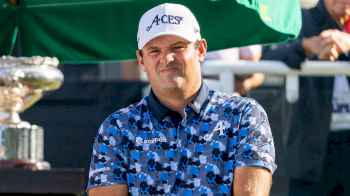
When Patrick Reed announced his surprising departure from LIV Golf earlier this week, neither he nor LIV provided a clear reason for his decision, stating only that they could not reach an agreement.
Perhaps Reed, who plans to rejoin the PGA Tour in late 2026 following an eight-month suspension, was homesick, dragged down by LIV’s globetrotting schedule, and only a massive offer would convince him to return. Perhaps LIV extended an offer, but less than Reed’s initial signing bonus, and he turned up his nose. Maybe LIV saw diminishing value in Reed and seized an opportunity to dispatch him. Or maybe Reed and LIV had mutual interest but LIV lacked the necessary cash to close the deal.
Whatever drove Reed’s decision, it likely came down to money or risk, and on the eve of LIV’s 2026 season, there’s reason to believe both factors could have played a role.
View this post on Instagram
For all the headlines LIV generates in the golf world, the league represents only a sliver of the Saudi balance sheet.
Officially, the Saudi Public Investment Fund (PIF) is worth nearly $1 trillion. Since LIV’s inception, the league has accrued a comparatively small $5 billion in losses, according to LIV’s regulatory filings. Five billion dollars isn’t nothing — but LIV brings benefits that can be harder to quantify, like international cachet and cultural clout and a cozier relationship with U.S. political royalty. In short, the upside to the Saudis is less financial than it is influential.
But that was when the PIF’s money was seemingly limitless, and now that funding appears less stable.
The most well-known catalyst of the Saudi “liquidity squeeze” has nothing to do with golf. Rather, it is a place called Neom, an outrageously opulent “city of the future” under construction in the middle of the Saudi desert. For a time, Neom was the crown jewel of Saudi Crown Prince Mohammed bin Salman’s “Vision 2030” — his dream for modernizing his country and diversifying its economy for the modern age. The city was the center of an unprecedented string of infrastructure and real estate investments by the Kingdom, which harbored dreams that the uninhabited patch of desert would one day become a hub of economic and technological innovation.
The reality has been a headache. Today, nearly a decade into the project and after years of over-budget, behind-schedule construction, Neom consists of a small subdivision in the desert. There is no ski resort or high-speed rail. The PIF has spent more than $50 billion on the project, and an internal audit, according to the Wall Street Journal, estimated the cost to complete the city to its initial scale at $8.8 trillion, more than eight times the Kingdom’s initial estimates.
At the same time, the old way of doing business in Saudi Arabia has experienced an unexpected downturn. Over the last year, the global supply of oil exploded, thanks to increased production in the United States and several other nontraditional oil-producing nations. As a result, the cost of oil has dropped to its lowest levels since 2021, according to reports from the U.S. Energy Information Administration. Under MBS, the Saudis have been keen to diversify their economy beyond oil, but such wholesale economic transitions take time. Much of the Saudi economy is still tethered to the country’s oil interests, according to an end-of-year report from the International Monetary Fund, and those oil interests are currently underperforming.
The result of an oil downturn and a wildly ambitious infrastructure policy? Suddenly, the Saudis are light on cash and facing mounting deficits, the Financial Times reports.
On Sunday, the same day that Patrick Reed revealed his stalled negotiations with LIV, the FT reported the latest evidence of PIF belt-tightening: the fund had dramatically scaled down its vision for Neom, envisioning a “far smaller” final project with a significantly lower price tag.
“The changes come as Riyadh seeks to manage its finances as it grapples with tightening liquidity after a decade of massive spending and with oil prices subdued,” Andrew England and Chris Campbell wrote. “It also still has hard deadlines to meet in costly preparations to host the Expo international trade fair in 2030 and the football World Cup in 2034.”
Could all this economic maneuvering have affected Reed’s contract negotiations? We don’t know. We do know Reed said he would be “surprised” if he wasn’t playing in LIV’s season-opening event as recently as Sunday. Three days later, he walked to LIV’s rivals.
If the Saudis are slashing budgets for Neom, the country’s splashiest economic swing, it’s not unreasonable to think they could take a more restrictive approach to the remainder of the PIF portfolio, LIV included. Even if they don’t, LIV’s willingness to spend remains a crucial question heading into the future.
In the next two years, the league faces critical (and, surely, costly) contract-extension decisions with stars like Bryson DeChambeau and Jon Rahm. Without nine-figure deals matching (if not exceeding) the duo’s original signing bonuses, it’s hard to envision either Rahm or DeChambeau sticking around. (DeChambeau has already floated YouTube as a full-time pursuit should negotiations fail to meet his expectations.) And without superstars on LIV rosters, it’s hard to see a path for the league to achieve long-term viability.
In a statement announcing his LIV exit, Reed called himself “a traditionalist at heart” who was “born to play on the PGA Tour.” He added that his made his decision “for our family, our children.” Reed would not be the first player to feel the strain of a LIV schedule that travels to five continents and requires long stretches on the road. He would not be the first player to fret about the long-term prospects of a league struggling to obtain TV viewership or significant influence in the golf world. He would be within his rights to worry about the viability of his major championship future; the league still has not obtained the World Ranking Points necessary for its players to secure major championship eligibility.
For the world’s top players, the risk of joining LIV persists. LIV knows risk costs money, and even sovereign wealth funds don’t have an endless supply of that.
The post Patrick Reed’s LIV exit reflects league’s larger dilemma appeared first on Golf.