This here is the Lancool 217 chassis from Lian Li. Now, for the uninitiated, Lancool, for the longest time, was a subsidiary part of Lian Li. The concept behind it was to cater more towards budget-oriented PC builders and folk who preferred airflow over shiny glass and tempered aluminum hot boxes. Without necessarily capitulating on all of those wee PC building quality of life improvements that the big cuboid chassis often delivered.
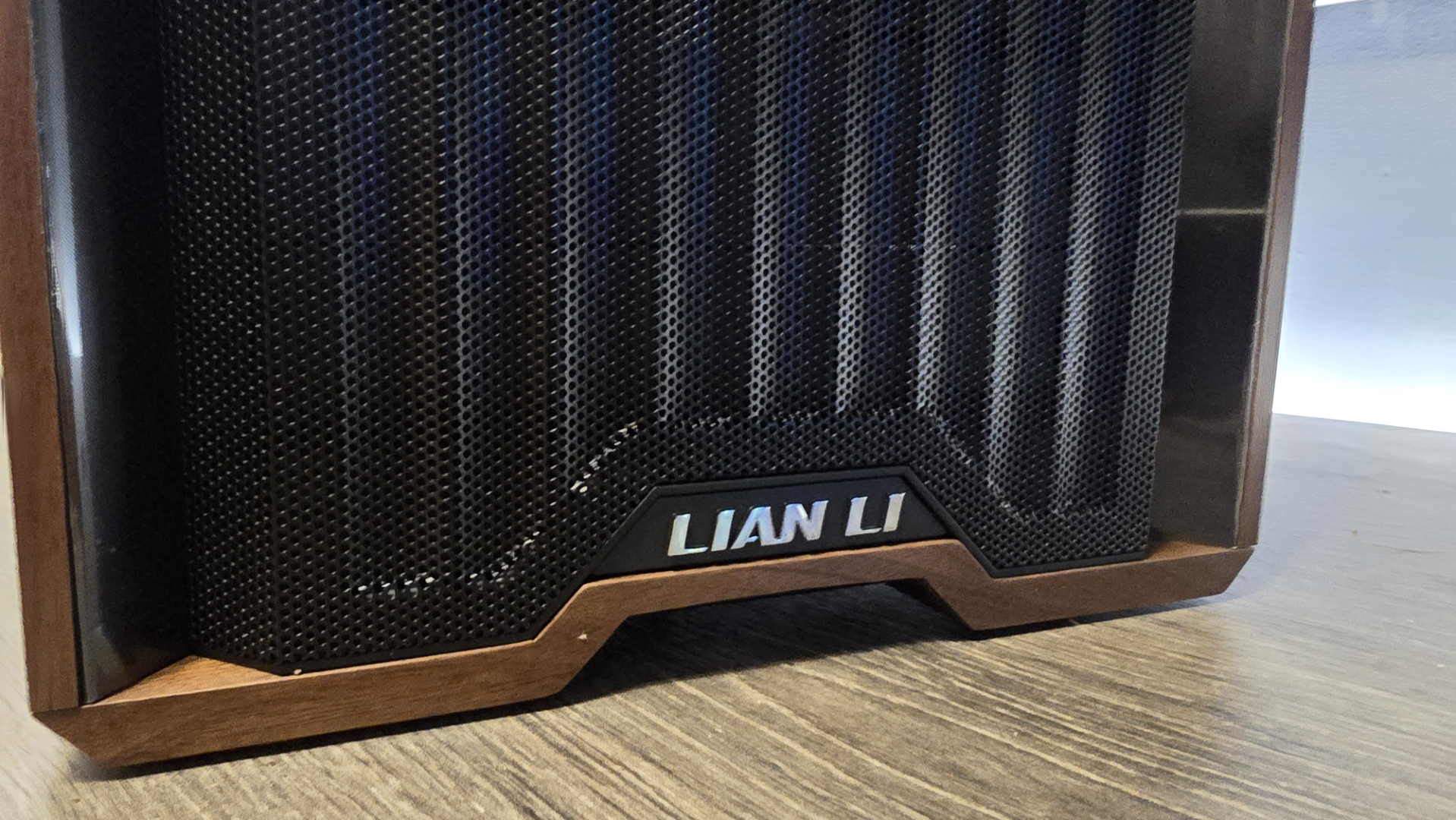
In the modern era, that whole premise has now changed, and quite dramatically at that. Lancool is no longer its own isolated thing, but almost just a product line within Lian Li's chassis arsenal, with the brand's logo now strapped on everything from the box art to the front panel of this wood-lined boy.
Pricing, too, has equally shifted in a far tighter direction. The 217 here rocks up at $120, or £103 in the UK. Compare that to Lian Li's more premium solutions, such as the O11 Vision Compact for example, and you can find that thing for $125 or £110 in ol blighty. Not a lot more for a beautiful glass case, with arguably just as much airflow clout (in fact, it's arguably one of the best PC cases full stop).
That puts the Lancool 217 at a significant disadvantage. Not only does it have to contend with premium flagship offerings internally, but these price ranges have become increasingly contested over the last few years as well.
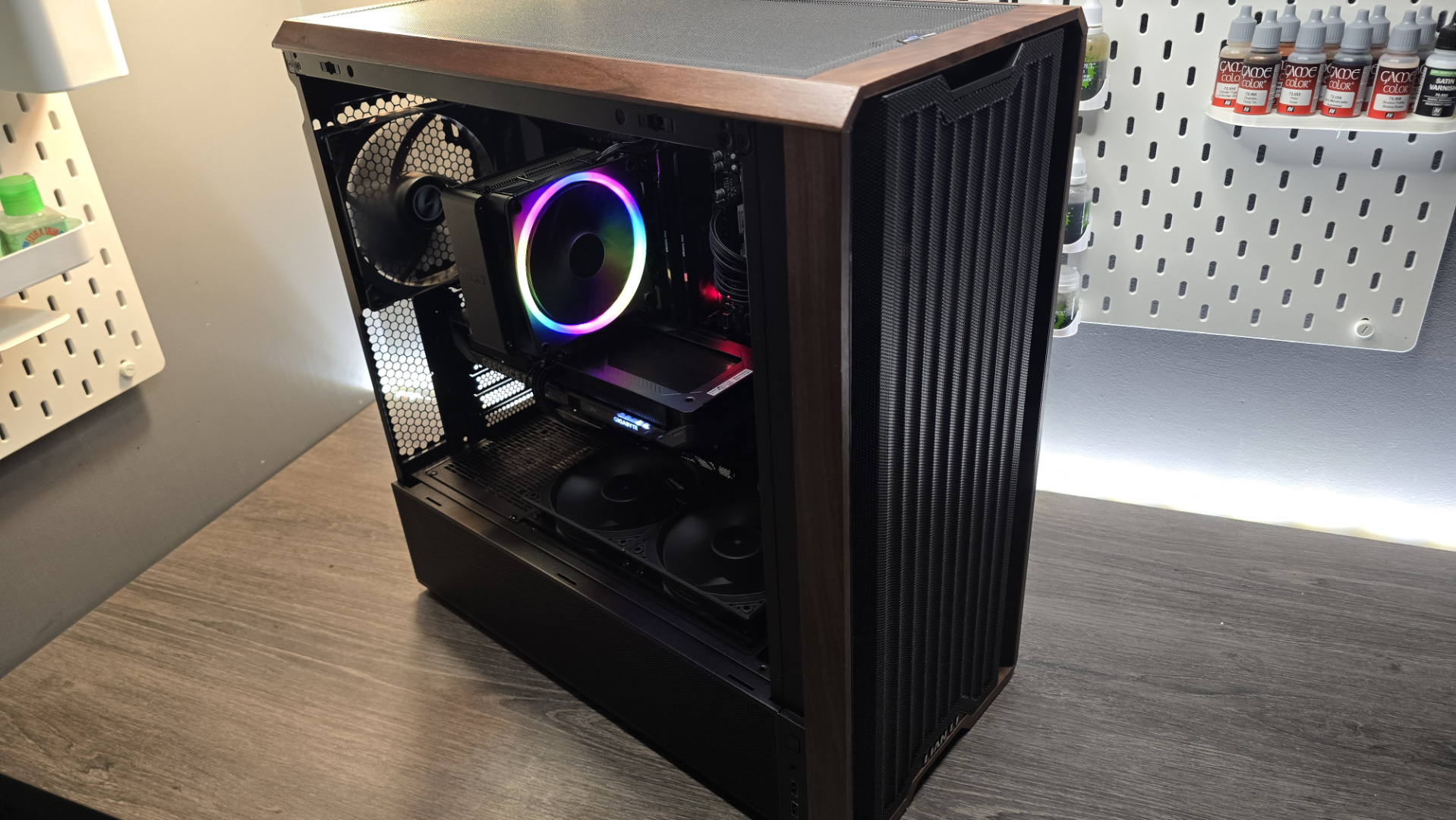
Form factor: Mid-tower
Dimensions: 48.2 x 23.8 x 50.3 cm
Motherboard support: ITX, mATX, ATX, E-ATX (up to 280mm), SSI-EEB (up to 330 m) + Back connectors for ATX, M-ATX
Expansion slots: 7 horizontal
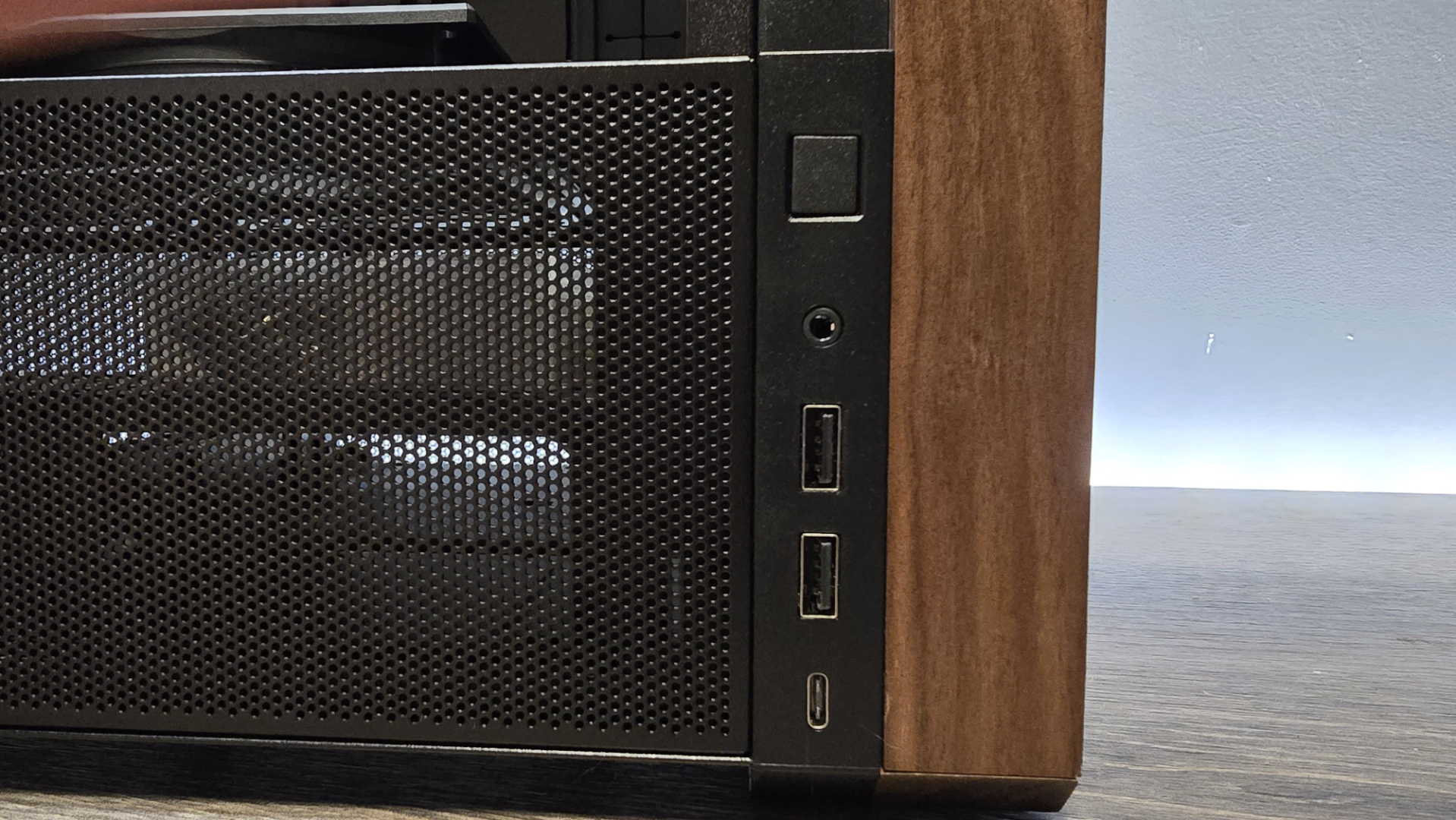
Front IO: 2x Power Button, 2x USB 3.0, 1x USB 3.2 Type C, 1x Microphone/Headphone Combo
Total fan support: 10
Fan count: 3x140/120 mm or 2x170 mm FRONT, 3x120 mm or 2x140 mm TOP, 3x120 mm BOTTOM, 1x140/120 mm REAR
Radiator support: Up to 360 mm TOP
Graphics card support: 380 mm length
Storage: 5x 2.5-inch; 2x 3.5-inch
PSU support: ATX (up to 220 mm or 180 mm rotated)
Weight: 9.25 kg
Price: $120/£103
NZXT's H7 Flow RGB can be had for $90, complete with a full-tower design, epic airflow, and an included 360 mm RGB fan setup too. And that's not to mention the cases coming out of Phanteks, Corsair, and Fractal, too. The long and the short? The 217 has some seriously stiff competition.
The good news, then, is that the 217 comes with an absolutely insane amount of features baked in it as standard. It's hard to undersell that as well. No avant-garde metaphors or silly wordplays really do it justice.
There's support for E-ATX and EEB motherboards, back connections, multiple PSU mounting directions, vertical GPU support, integrated anti-sag brackets, an insane amount of included high airflow fans, plus the opportunity to strip down almost every panel off the thing, 3D-printing STL files, and twin power buttons too, one on top and one on the side for your convenience, just to name a few. It's nuts.
It's the aesthetic that will likely catch the most schtick, mind you. It has this love-it-or-hate-it, kinda vibe, the marmite of the PC building world, as it's this sort of hybrid mix of modern "wood" style, meets late 2010s case design.
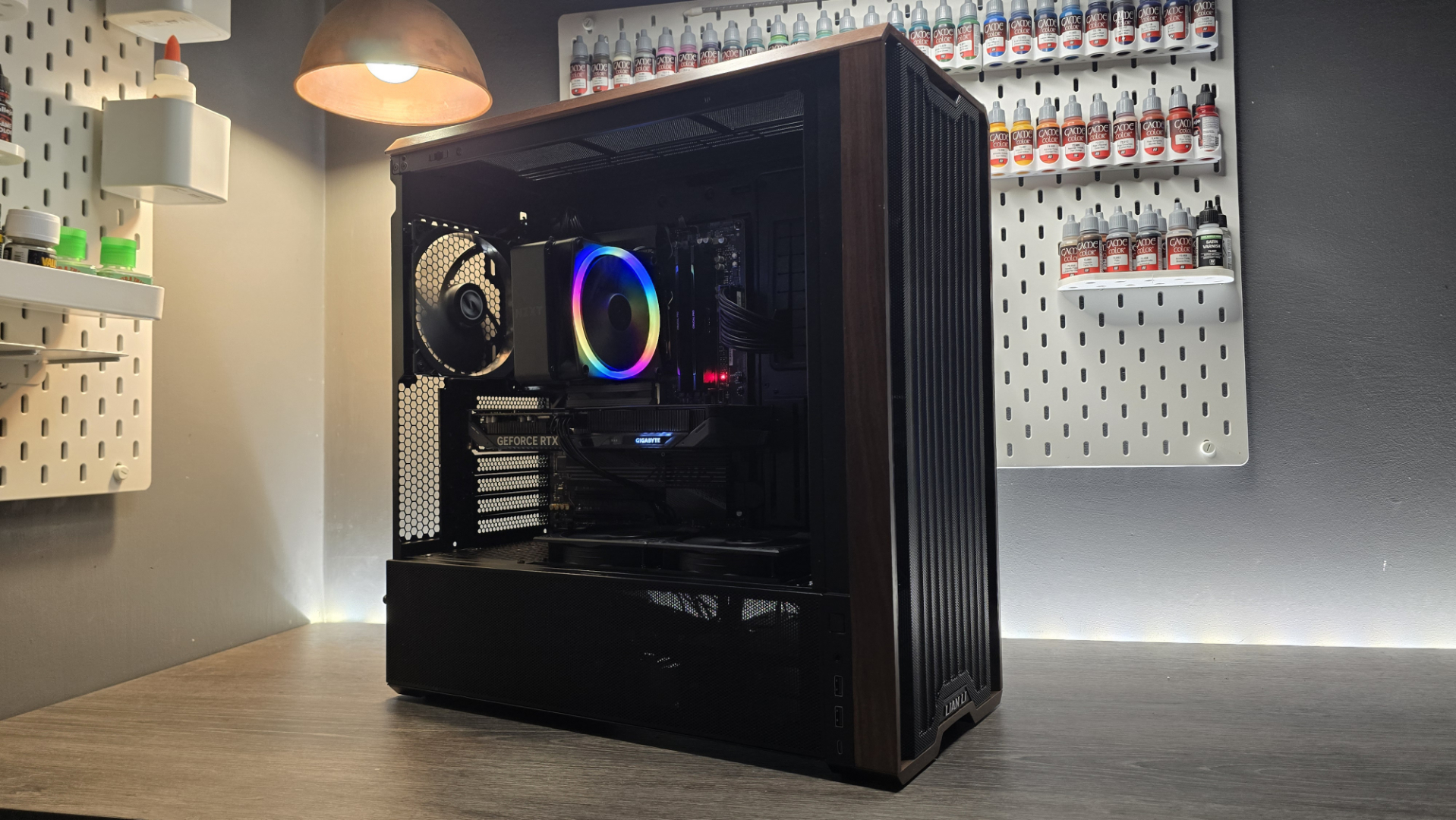
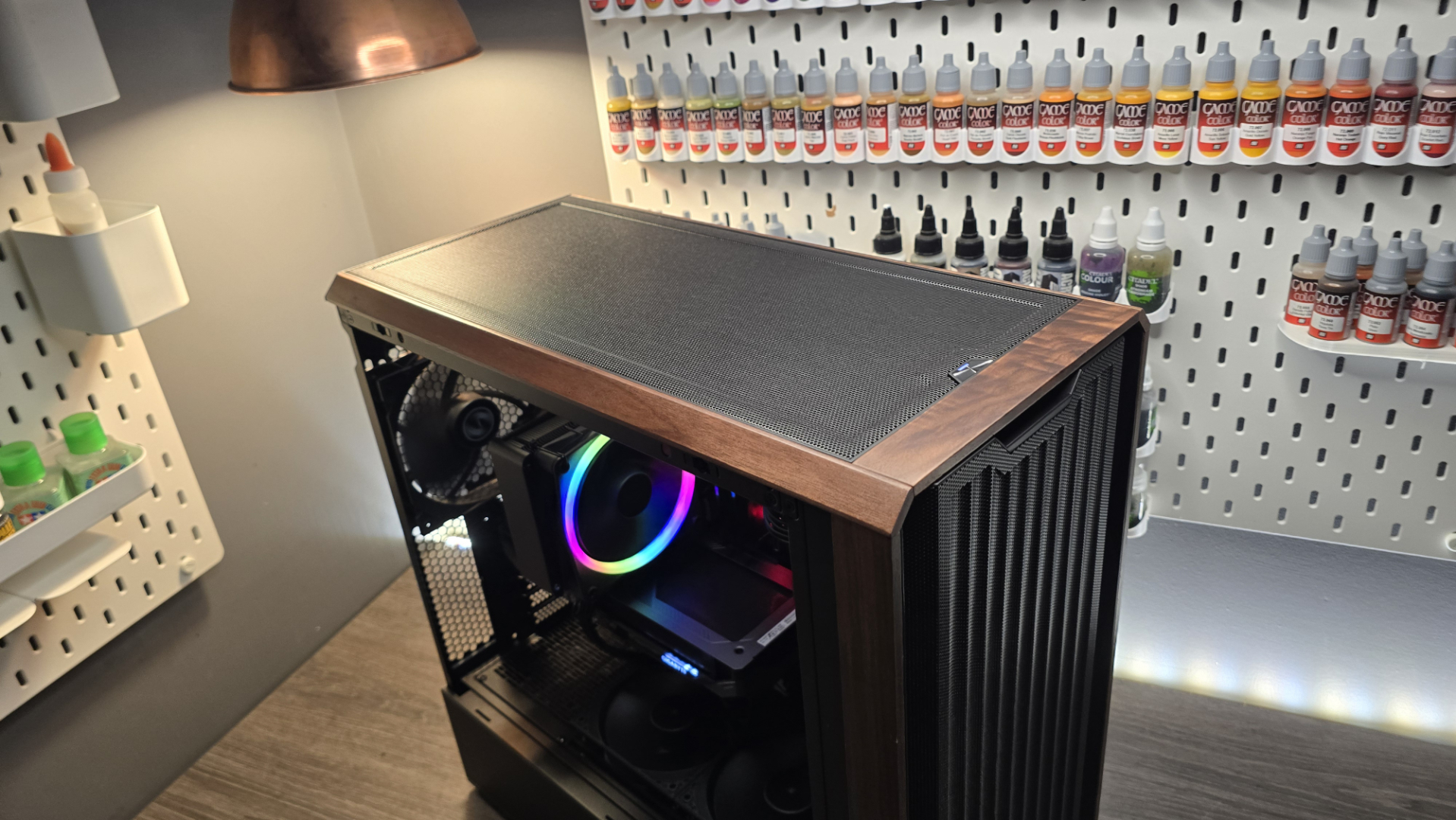
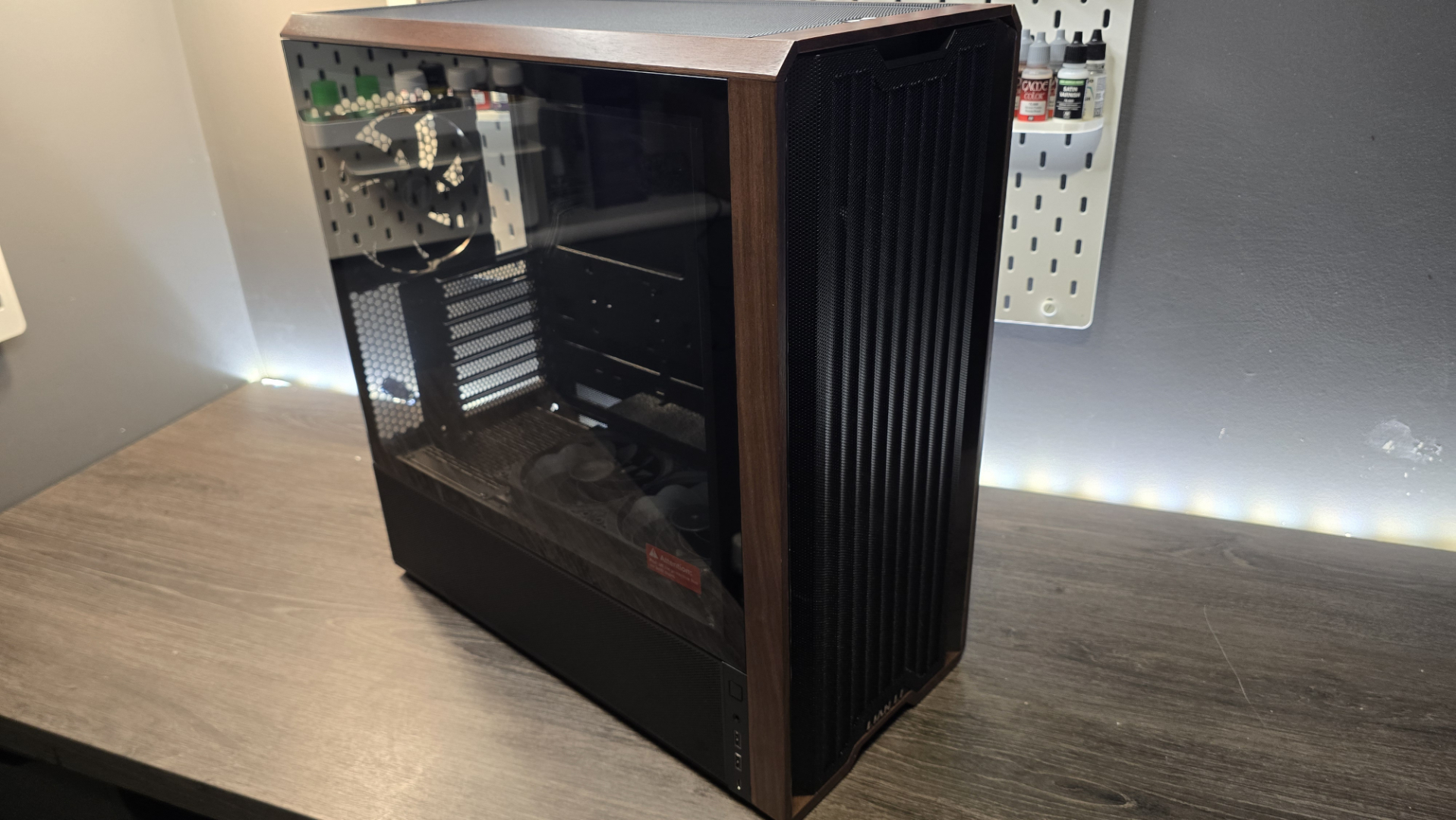
You've got that classic steel mesh and overall frame, with wooden accents. You can either have the thing in black or white, with either a walnut or oak trim, respectively. It looks to be a veneer rather than a solid strip of wood (although I haven't taken the saw out to triple-check that just yet). It's almost trying to encapsulate that Scandinavian Fractal Design North kinda vibe, but it's a little less committed to it, and a little worse executed, which is a shame.
On the cooling front, however, the 217 is exemplary. As standard, it comes with five pre-installed non-RGB fans. You get the two 170 mm units in the front (delivering 3.34 mmH2O and 142.56 CFM per unit), two 120 mms in the floor (reverse blade models, driving air up into the GPU at 66.9 CFM), and a rear 140 mm as your exhaust. The ones found above the PSU shroud and the front of the chassis are pre-installed with these modular, rubber feet that operate in a similar manner to how old-school hard drive caddies did, where you position them, then slot them into place, which helps to mitigate unwanted vibrations. They do, however, suck in transport and can come loose in shipping if the case takes a knock or two.
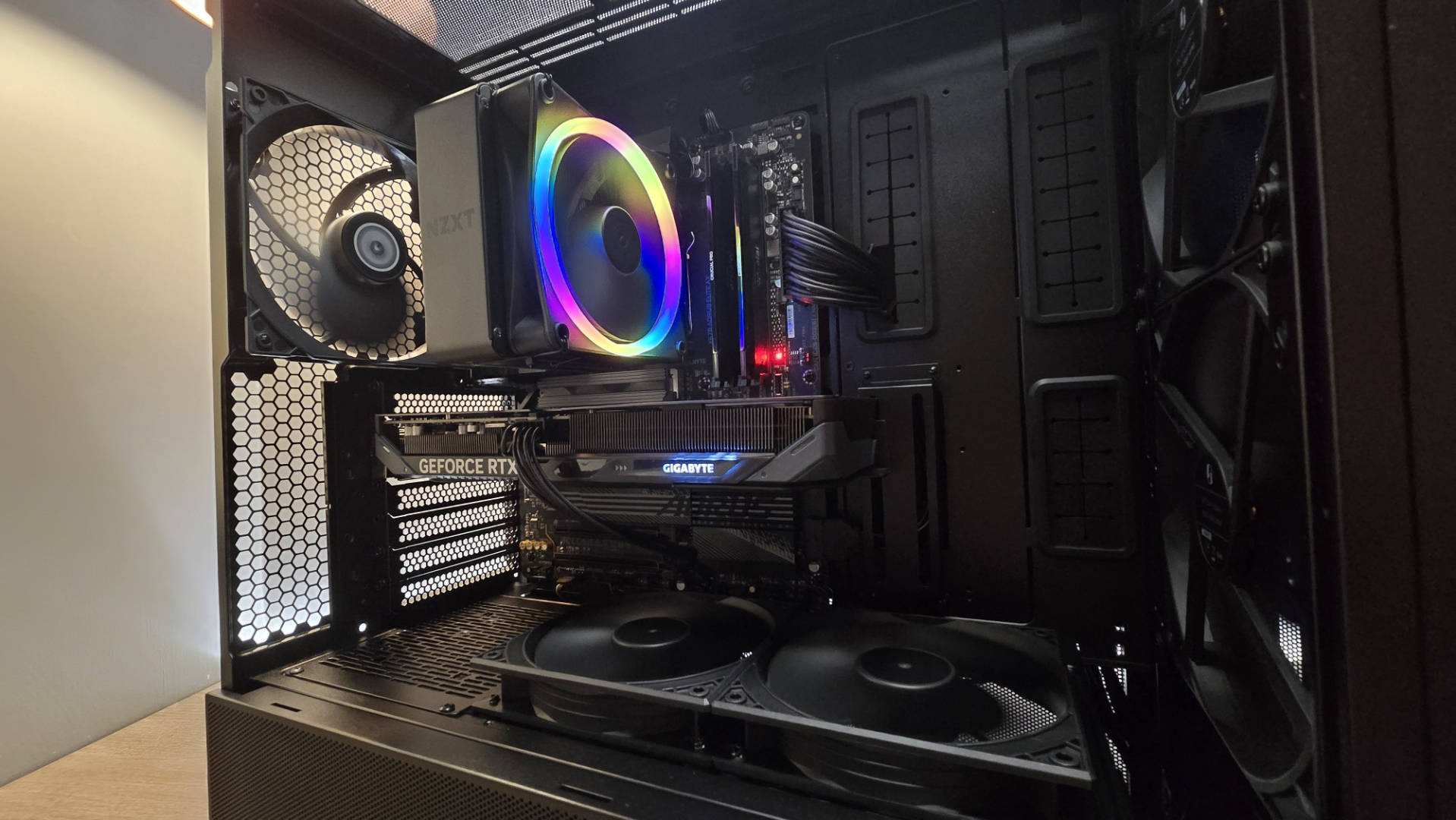
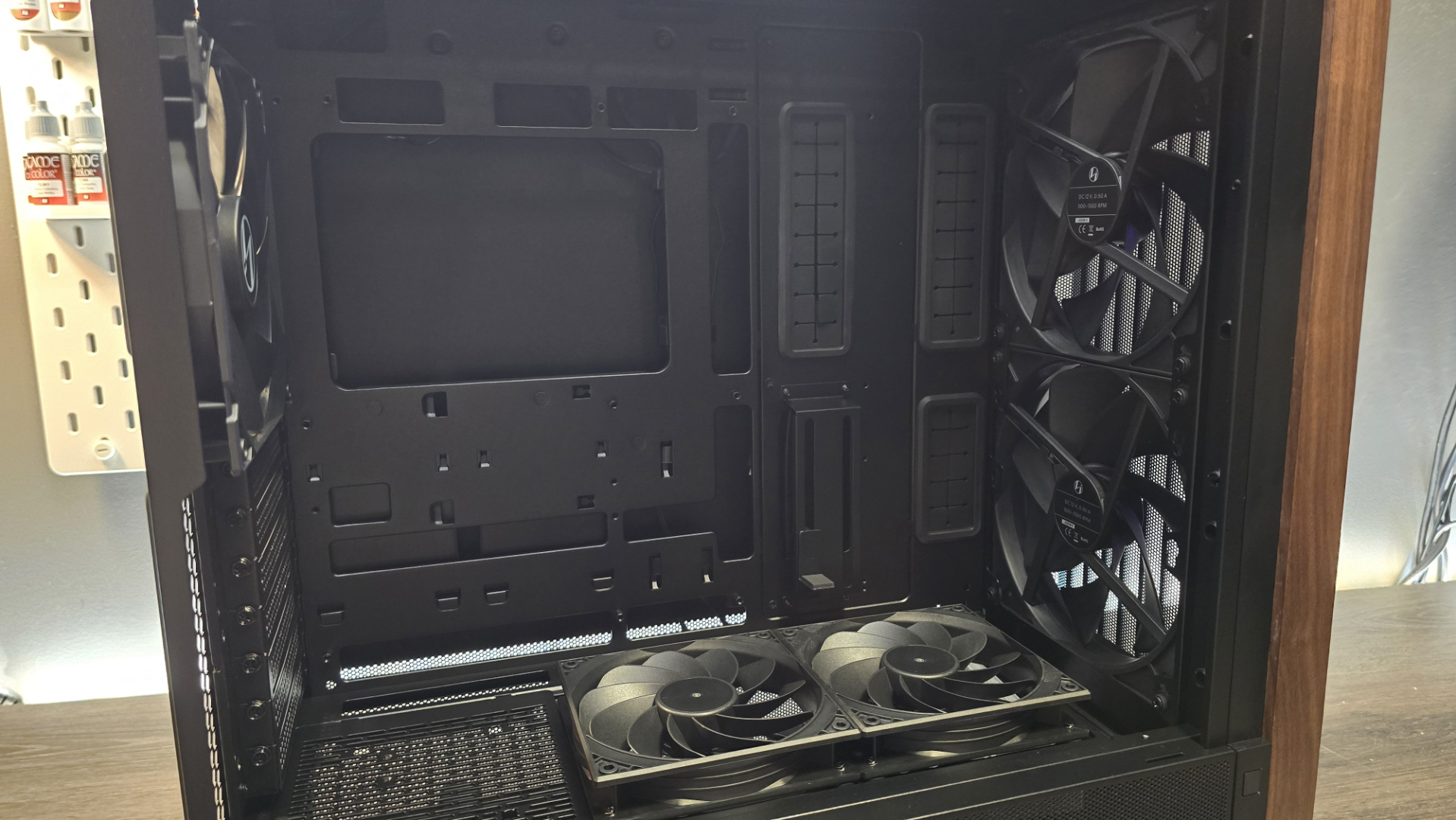
General fan support is expansive as well, as you can include an additional three fans in the roof, along with a 360 mm rad (there's a removable radiator bracket up here), and if you have a shorter PSU (Lian Li's thinking you use one of its shorter Edge units for that), you can rotate that by 90 degrees in the bottom of the case to give yourself an easier time on the cable management, strap the included power passthrough cable to it, and install a third 120 mm fan to draw more air up into the GPU as well.
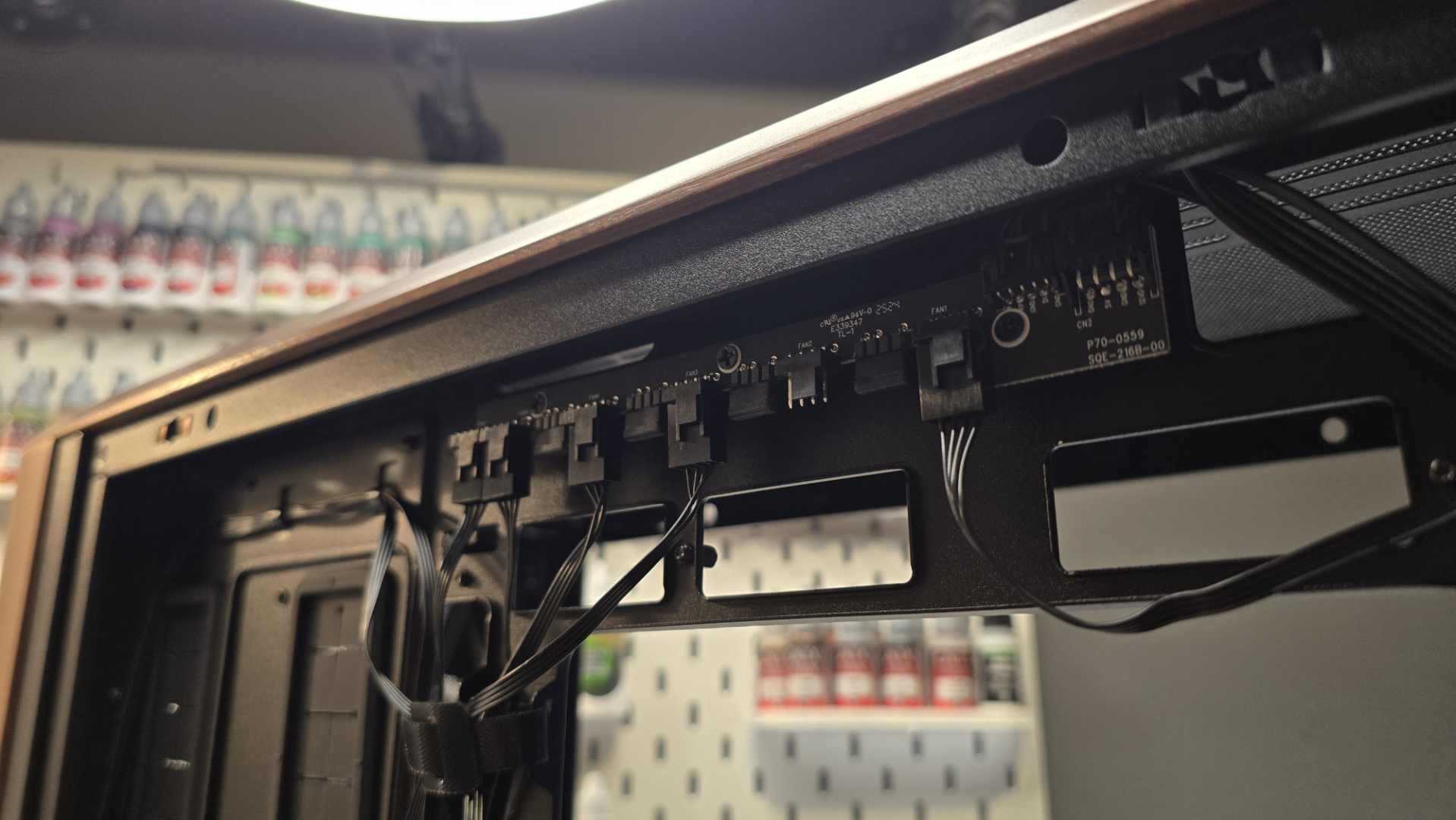
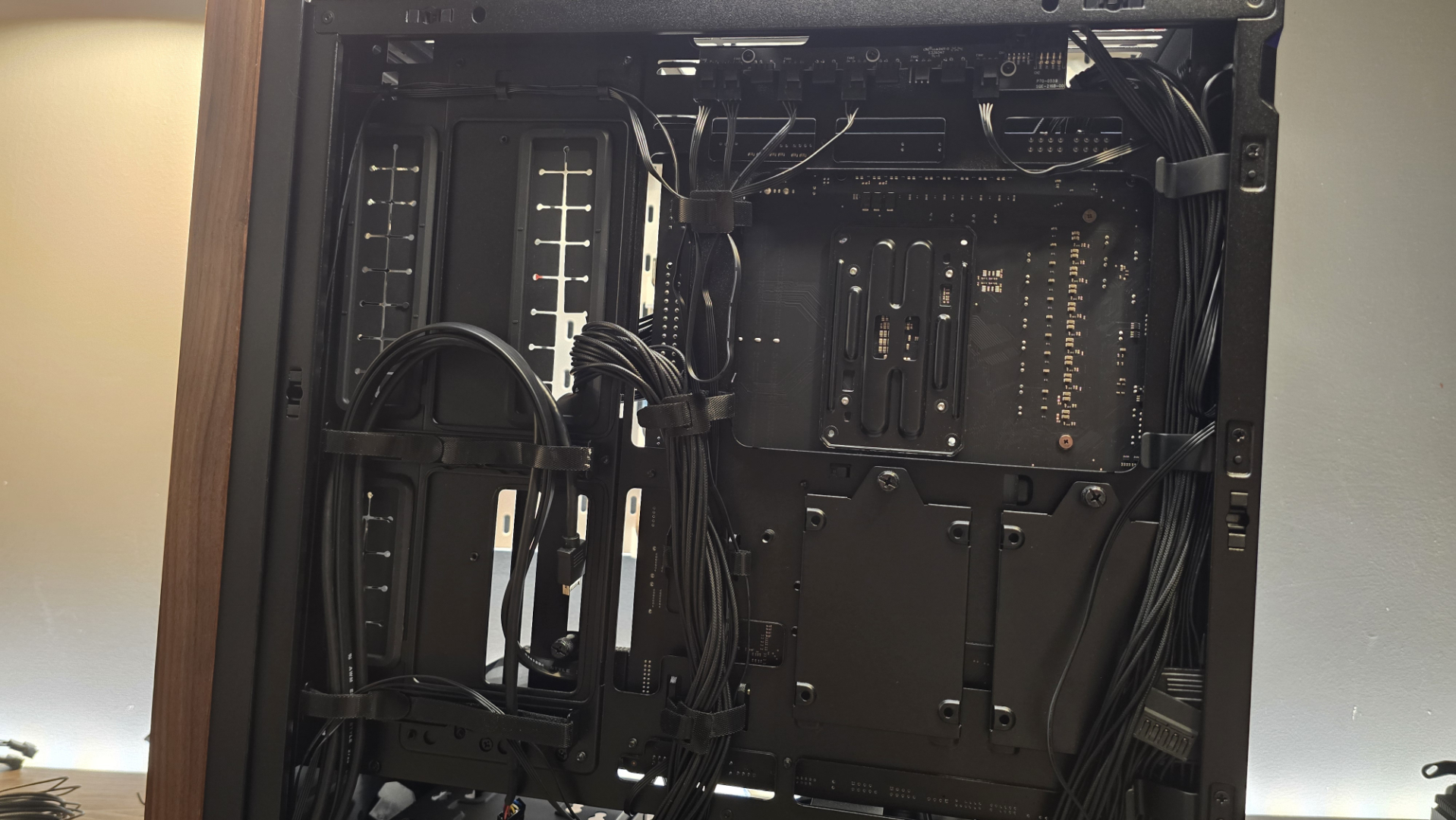
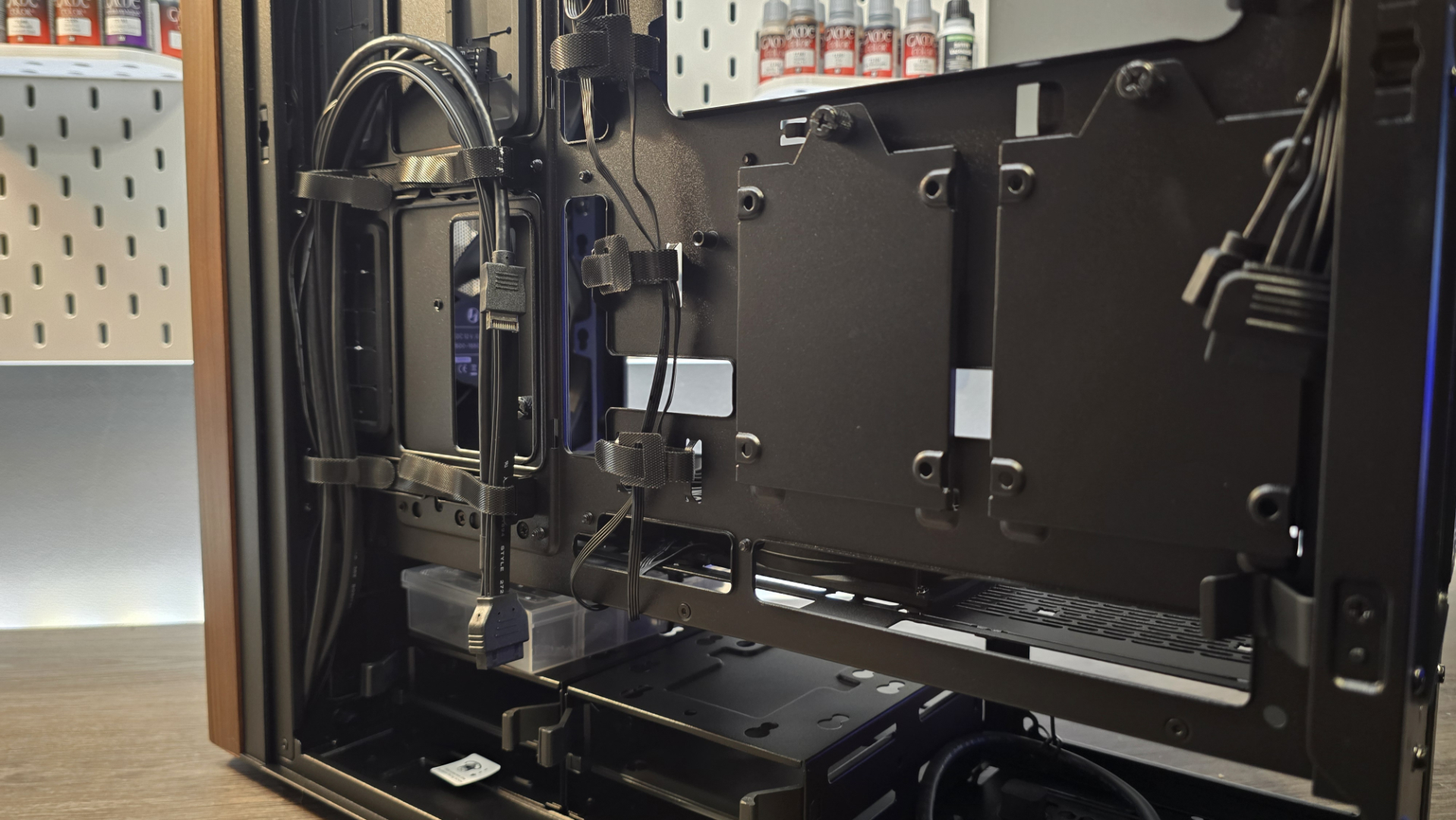
A quick glance behind the wee beastie, and cable management is an absolute treat too. You've got plenty of rubber grommets, an included fan controller, and velcro straps here, along with that aforementioned back connector support if you're into the "no-cable" look.
Building in the thing is an absolute doddle. If you just want a quick and easy setup, with no bs, you can just grab yourself one of the best air coolers out there that money can buy, slap your system in here, and you're done. Building our test rig in the 217 took me a grand total of 25 minutes, and by the time I was finished, all the cable management was tight, and the system was up and running without issue; cool, quiet, calm, and collected.
✅ You're building your first PC: With epic cable management, solid fans, and a feature list that'll chew your arm off, the 217 is outstanding for any would-be first-time PC builder.
❌ You're after a bargain: At this price point, the 217 has to compete not only with seriously more affordable competition from NZXT and co (delivering better quality materials too), but even products in Lian Li's own back catalog.
But, but, but, the issue doesn't lie with the features on display here. Lancool has had that down for well over a decade now. It's the price.
The reality is, a lot of the stuff on display here, the intuitive quality of life improvements, and build frills are great, but you're going to use them once, maybe twice per year at most (unless you have an absolute blinder with parts failing), and then forget about them, sadly. After that, what you're left with is a rather expensive chassis that performs well, but kinda doesn't look the part compared to other models available at this price point, even from within Lian Li's own lineup.
And look, that's the issue. The O11 Vision Compact I mentioned earlier supports more fans, more radiators, a healthy complement of 2.5 and 3.5-inch drives, and comes with just as many pc building creature comforts as the 217 does. All while looking better, for not a lot more money. Yes, admittedly, you do have to buy your own fans for that case, but even so, that's a serious problem the 217 has to overcome if it wants to make a dent in the market.
It's not a bad case by any means. In isolation, it's outstanding. If this is your first PC, building in the 217 couldn't make that experience any easier. It just needs that price lowering by $30 or so, then and only then would it be perfect.