
Welcome to Fully Equipped’s weekly Tour equipment report. Every Friday of PGA Tour weeks (plus other times, if news warrants), GOLF equipment editor Jack Hirsh runs you through some of the biggest news surrounding golf clubs on Tour, including changes, tweaks and launches.
Jordan Spieth doesn’t change equipment very often and when he does, it’s rarely during the season, which makes his moves before this week’s Cadillac Championship all the more intriguing.
After a first-round 65 at the Miami Championship, his best score of the season that left him one off Cameron Young’s first-round lead, Spieth was asked why he was tracked hitting 190 balls on the range at Doral on Tuesday.
Not only did Spieth switch to a new Titleist GTS2 driver and 3-wood this week, but most surprisingly, Spieth is playing a new golf ball this week, a Titleist Pro V1x Left Dash.
Throughout the entirety of his career, Spieth has played a version of the Titleist Pro V1x, which is usually the spinnier of the two golf balls, especially with irons and around the greens. But this season, Spieth said he’s noticed at time where his spin seems a little too high.
“I’ve been spinning a lot the last year and a half on the range,” he said Thursday. “I just thought it was a driving range thing. And I’ve been taking my [launch monitor] monitor on to the golf course and trying to see. Then I had, I don’t know, maybe a dozen shots I could tell you in the last year or so that came off just odd for an iron, spinny, ended up short.”
Spieth wanted to test this at the Masters, but since Augusta National does not allow launch monitors on the golf course, it had to wait until the following week at the RBC Heritage for him to test the lower spinning Pro V1x Left Dash. That’s when he approached the Titleist Tour team about making a switch.
“I just saw it happen, and I had a couple shots cost me what I thought were perfect shots kind of, you know, occasionally the first few you’re going to think, oh, it’s coincidental, there’s a wind or something like that,” he said. “But it was enough of a sample size to say let me explore other options.”

View Product
He utlimately stuck with his standard Pro V1x at Harbour Town — although on Thursday he couldn’t remember if he switched or not at the RBC — and kept testing at home in the off week. By the time he got to Doral, he was prepared to move into Left Dash.
Spieth worked with Titleist Tour Rep JJ Van Wezenbeeck and Director of Tour Validation and Research Fordie Pitts on the range to confirm the move to Left Dash was the right one. They found the Left Dash was spinning roughly 300-500 RPM less than his Pro V1x depending on the club.
Spieth called a ball change “extremely rare” for him mid-season. He’ll usually wait until the offseason to test new gear like he did this past winter with Titleist’s new 2025 T100 irons and the Vokey SM11 wedges.
He said he did switch from the 2021 to the 2025 model of the Pro V1x last spring in season, but that was a much simpler move.
“And those balls weren’t super different. This is a little bit bigger jump. But I hit enough shots to feel confident that it was better for me than what I was playing,” Spieth said. “I’ve always played the highest pin spinning ball because I thought I needed it in the long irons. Now with this whatever my makeup is and then just kind of added speed my spin rates have been fine if not too high. So it’s actually kind of nice to be able to drop it down a little bit.”
After the ball was dialed in, Spieth was already liking what he saw with the GTS2 driver and needed a 3-wood after his TSR3 gamer caved in on him he said. He and Van Wezenbeeck worked on the range to dial in the new driver and 3-wood. to match his lower spinning golf ball.
He also made a change, going to the Fujikura Ventus Black OG in the 3-wood to match his driver shaft, but after the round, he wasn’t too sure if the GTS2 was exactly the winning head yet.
“It’s kind of a trial run,” Spieth said. “I didn’t hit it great today so I’m going to go hit a few on the range and continue to fall in love with it.”
For what it’s worth, he gained nearly a half stroke off-the-tee in Round 1 while he’s been losing strokes all season, so he’s probably not too far off.
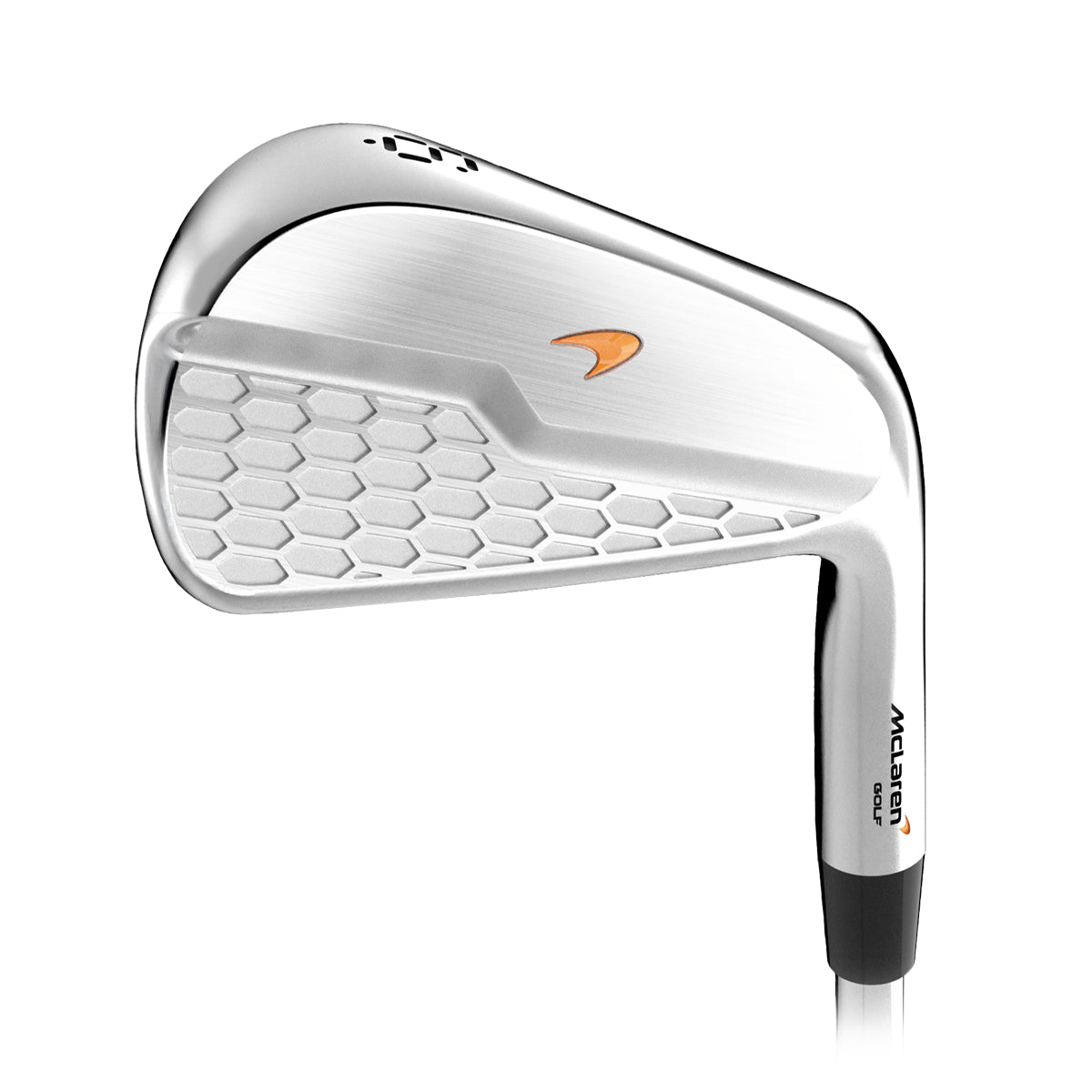
Easily the biggest gear story of the week was Justin Rose joining McLaren Golf and debuting their Series 1 and Series 3 irons this week at Doral. You can check out the inside stories of why Rose decided to team up with McLaren, how the brand was built from scratch and the details of the new irons, but we wanted to dive deeper into the testing process that led Rose to game a split set of the Series 1 and Series 3 this week.
Below is an Q and A with McLaren Head of Design – Irons and Wedges, JP Herrington on Rose’s testing process with the club. Herrington personally built the irons Rose is using this week.
(Ed. note: This Q and A has been lightly edited for clarity and brevity.)
Jack Hirsh: What does the fitting process look like for someone who had a hand in designing these irons?
JP Herrington: One of the first things we want to do is really establish that address profile — what it looks like looking down at the golf club, the face profile, toe height, par height, that transition in between that leading edge and all those offset and those things. Justin said early on that the first thing you do is set it down at address, right? So if you feel that confidence or just that the look that fits your eye, that starts those positive vibrations.
JH: What comes after you lock in the look?
JP: Once you establish that face profile, then you can start on the next phase, which would be ultimately the sole and CG. We created a lot of prototypes and just kind of had a competition of the soles based on his performance and feel. If there were adjustments, you go back, you make adjustments, you retest, you just keep repeating that process until you get it right.
JH: How do you test and refine CG?
JP: You want to hold one variable constant — let’s say the CGX — and do a variable on CGY, and then vice versa. So now you’re identifying those variables. Then you want to hold all those things that we prototyped and tested into what that design is going to ultimately end up being.
JH: What was he looking for in this set that he wasn’t getting with what he was playing previously?
JP: The sole that he was using felt a bit clunky through the turf, right? And that also created some knuckleballs type of thing, flyers and things like that, not generating that consistent spin. Consistency in those spin rates and launch angles is very high priority for Justin. He’s like a human launch monitor at the end of the day.
View Product
JH: What kind of sole is on his irons right now?
JP: So currently right now we’ve got him into a lower bounce than that. One big bounce step down from the stock set with a real crisp leading edge. He has both sets and and will be going back and forth depending on turf conditions and softness and things like that. So if he needs a little bit more resistance to digging through impact, based on turf conditions, then he has that option.
JH: How does his delivery influence those decisions on what you do to avoid that with these irons?
JP: He has that kind of moderate attack into the golf ball. He’s not picking it every time and he’s not digging trenches out there. It’s just a real smooth delivery. He hits that ball first and then that thing is going to cut into the turf, and then get out of the divot and maintain that speed through the divot, which is important to finish the swing.
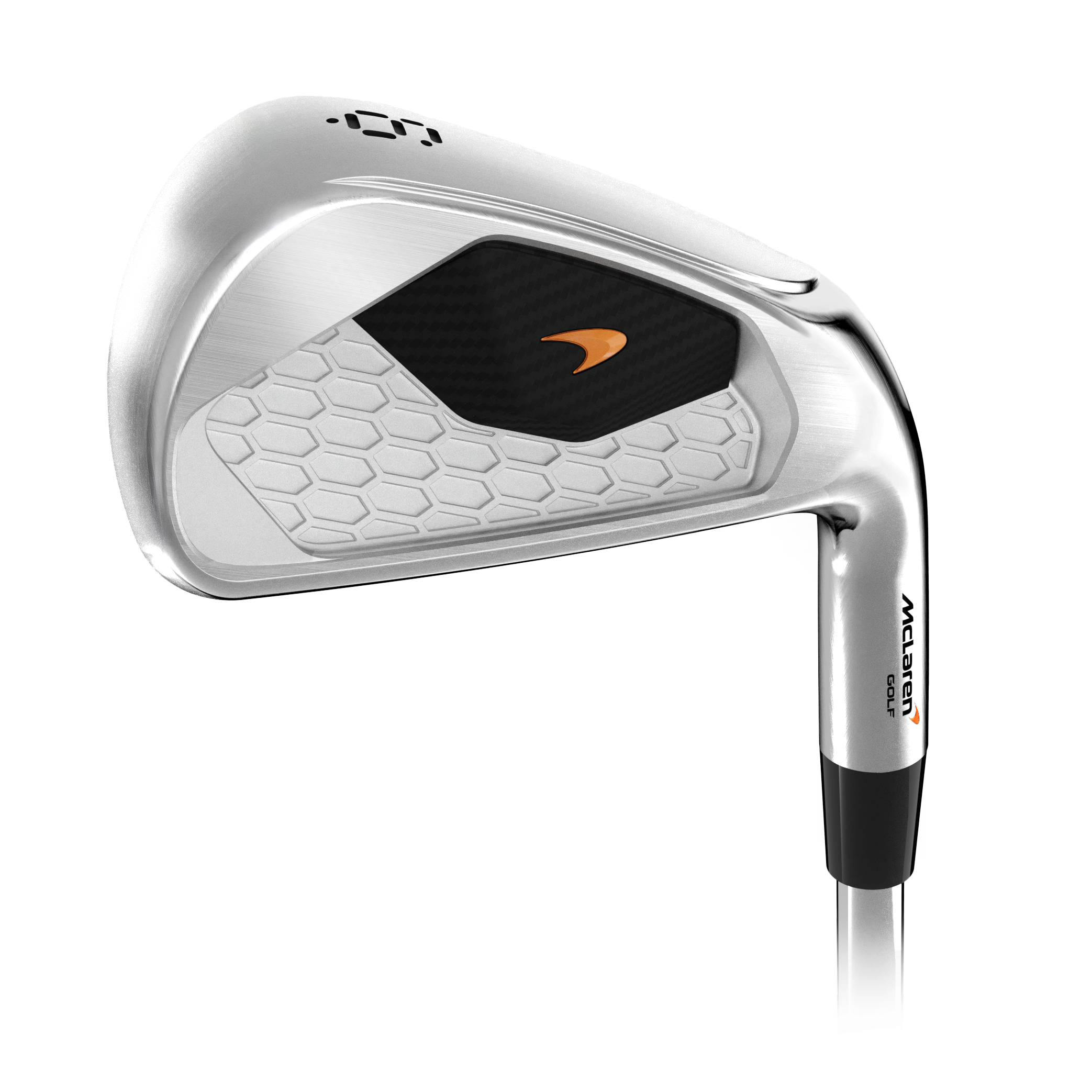
Q: Where do the Series 3 irons fit in? He mentioned he wasn’t sure whether he was putting in a Series 3 4- or 5-iron to his set.
A: He played the 4- and the 5-iron Thursday in the Series 3. One of the main things was that it was really holding its line very nicely, that face stability. That club has a higher MOI than the Series 1. It got a little bit more peak height and a little bit more ball speed, and that trajectory that he’s looking for as well.
Q: What kind of ball speed is he seeing with, let’s say a 6-iron
A: He was in the realm of about 135 mph 6-iron, and he’s been approaching 140 mph very comfortably. But it’s not just about that ball speed. It’s coupled with the spin, and that spin combination at that number was really performing.
Q: Any other key fitting elements?
A: “That progressive offset that we’re carrying forward into the retail Series 1. With more offset in those long irons, he can square the face easier, and then into the mid irons it reduces and then reduces further into the short iron.
And there was never a question about the shaft. He loves his KBS C-Tapers. It’s super stable, and we didn’t want to change too many variables.
View Product
Doral’s Blue Monster features not one, not two, but three beefy par-3s that are listed over 215-yards on the scorecard. That means you better have clubs that will specifically be ready to cover those yardages this week. There’s no reason to be in between clubs when you know the yardages ahead of time.
Tommy Fleetwood prepared exactly for those extra long shots.
Fleetwood has dropped his 56˚ wedge this week (going 52-60 instead) and has added a TaylorMade P770 4-iron in between his 9-wood and 5-iron.
According to TaylorMade Tour Rep Adrian Rietveld, Fleetwood’s P7TW 5-iron carries 220 while his 9-wood carries 240, so the goal was to find something to fit that 230 carry window.
The pair tested both this weak 4-iron (24˚) and a stronger P770 5-iron to try and fill the gap. Rietveld said both clubs have their advantages for roll out and different distances, but ultimately they went with the weak 4-iron, which he said might also get use on layups for the par-5s this week. All of the par-5s this week measure 570 or longer and two are over 600.

View Product
Fleetwood and Rietveld were sold when the former flushed the 4-iron on the par-3 9th during practice rounds and produced 151 mph ball speed, 108-foot apex height, 4683 rpms of spin and a carry of 229 yards. A perfect gap filler.
This is an awesome example of building golf clubs specifically for the course and many amateurs would be wise to do the same for their home course.
Most weeks, Fleetwood can live with the 20 yard gap between his 9-wood and 5-iron, but when he is presented with so many shots between 220 and 240 yards, why not add another option there to avoid having to hit half shots with a fairway wood or long iron?
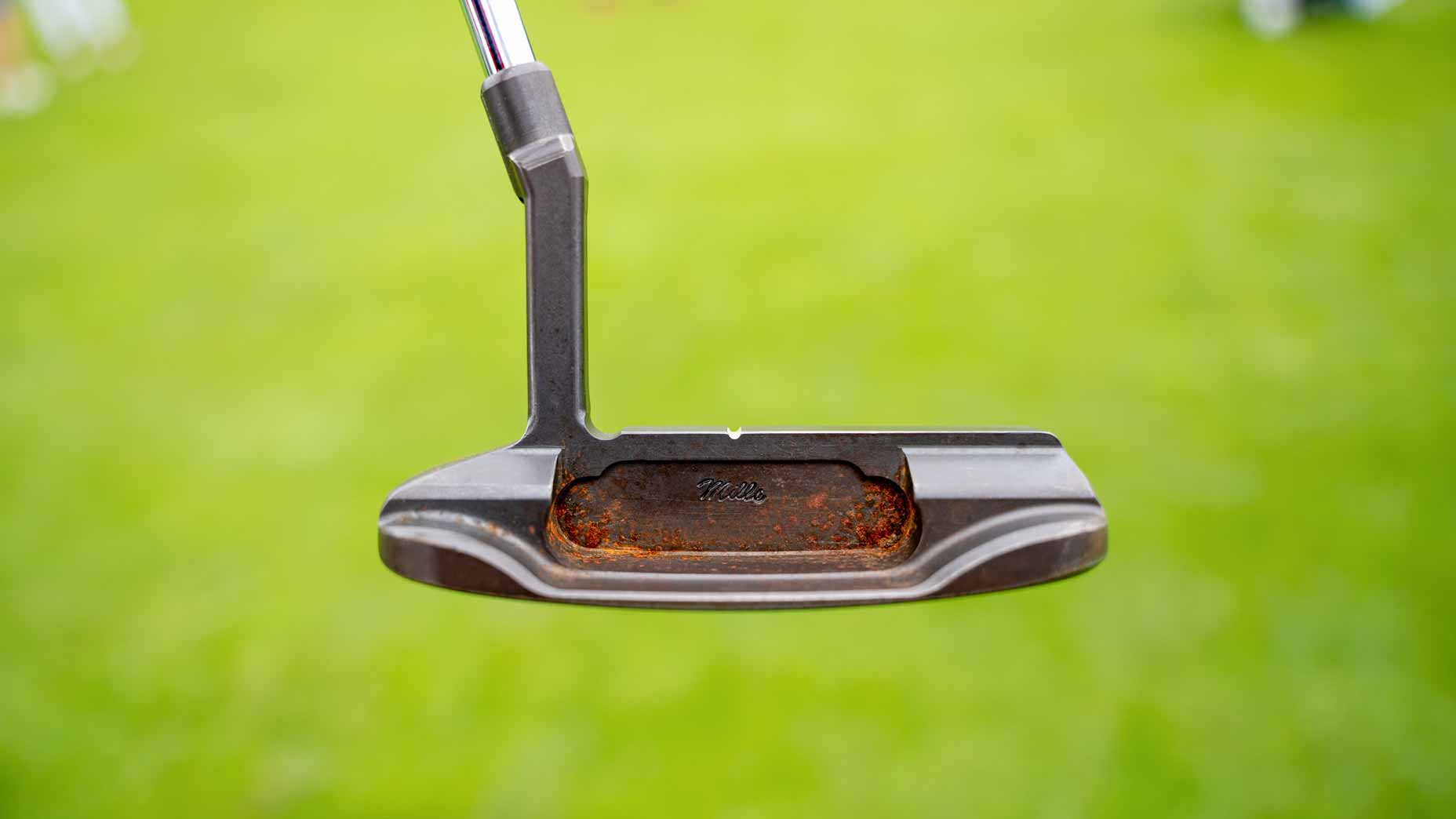
This section is dedicated to cool photos we’ve snapped recently on Tour, but haven’t had a reason to share yet. For this week, check out Jordan Spieth’s T.P. Mills Trad II Forged putter.
Some other gear changes and notes we’re tracking this week.
Nicolai Hojgaard is gaming a new Odyssey Damascus Milled Jailbird DB Prototype putter… Justin Thomas is still using his Scotty Cameron Newport 2 GSS that he switched to mid-way through the RBC Heritage … Rickie Fowler signed an Name, Image and Likness deal with UST Mamiya golf shafts … Brooks Koepka is a free agent again after dissolving his partnership with Cleveland/Srixon … The Titleist GTS driver picked up free agent converts of Maverick McNealy (GTS3), and Nick Taylor (GTS4), while staffer Michael Kim (GTS2) and Patrick Rodgers (GTS3) also added the new driver … Ricky Castillo also added a GTS3 5-wood … Keith Mitchell added a Qi4D LS driver … Chris Gotterup and Shane Lowery upgraded their Qi35 fairways to the Qi4D, with Gotterup switching 5-woods and Lowery going to a 16.5˚ 4-wood while keeping his previously added Qi4D 7-wood … Denny McCarthy also added a Qi4D 3-wood … Tommy Fleetwood went back to a black-finished Spider Tour
A selection of GOLF content from the past week that may interest you.
Justin Rose’s shocking McLaren move was years in the making – Dylan Dethier takes you behind the scenes of Justin Rose’s decision to join McLaren Golf.
Brooks Koepka, Cleveland/Srixon dissolve equipment partnership – After Brooks Koepka and Cleveland Srixon announced they are parting ways, what might be the next move for the five-time major winner.
This pro bomber uses a rare equipment combination for the LPGA – Jake Morrow dives into why Auston Kim is one of the few LPGA players to use Fujikura’s Ventus Black shaft in her driver.
The author welcomes your comments at Jack.Hirsh@golf.com.
Want to overhaul your bag in 2026? Find a club-fitting location near you at True Spec G
The post Why Jordan Spieth made ‘extremely rare’ changes to his ball, driver and 3-wood appeared first on Golf.