
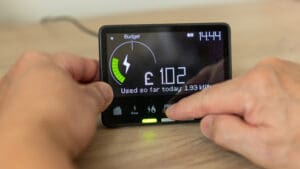
Analysts warned that annual bills could rise to around £2,500 if global gas markets face prolonged instability, undoing recent relief for consumers and reviving memories of the energy shock that followed Russia’s invasion of Ukraine.
Britain’s benchmark wholesale gas price, NBP, jumped by as much as 54 per cent to 122p per therm after QatarEnergy halted liquefied natural gas (LNG) production following attacks on its facilities at Ras Laffan and Mesaieed. Brent crude oil also rose sharply, trading about 9 per cent higher at $79.40 a barrel.
Qatar is the world’s second-largest LNG exporter after the United States and, along with the United Arab Emirates, accounts for roughly a fifth of global LNG supply. Much of that gas passes through the Strait of Hormuz, a narrow but critical shipping channel connecting the Gulf to global markets.
Shipping through the strait has largely stalled after Iran reportedly attacked tankers in retaliation for US and Israeli strikes that killed Ayatollah Ali Khamenei, Iran’s supreme leader. The strait is a vital chokepoint not only for LNG but also for oil, and any sustained closure risks triggering a broader energy supply crisis.
Although most Qatari LNG cargoes head east to major buyers such as China and India, disruption there would intensify global competition for alternative supplies, driving up prices in Europe and the UK. European and British gas markets tend to move in tandem because they are linked by pipeline infrastructure.
Tom Marzec-Manser, director for European gas and LNG at consultancy Wood Mackenzie, said the scale of potential disruption explains the market reaction. “The prospect of around 20 per cent of the world’s LNG being cut off from the market has unsurprisingly led to a sharp rise in prices. The key question now is how long the Strait remains closed. The longer it takes to reopen, the higher prices are likely to go.”
Europe relies on LNG for roughly a quarter of its gas consumption and entered the current period with lower-than-usual stockpiles after a cold winter. Analysts at Stifel warned that, if Qatari and Emirati supplies were curtailed for an extended period, gas prices in Europe could triple, potentially returning to levels above €100 per megawatt hour. In the UK, that could equate to wholesale prices of around 250p per therm.
Chris Wheaton, an analyst at Stifel, said such a scenario would mirror 2022’s price spike. “If LNG production from Qatar and the UAE were disrupted for more than six weeks, or if efforts to keep shipping lanes open failed, we could see prices triple from pre-attack levels.”
Under those conditions, the UK’s energy price cap could rise sharply when Ofgem next updates it. The current cap stands at £1,641 a year for a typical household. A sustained wholesale gas price of 250p per therm could push the cap to about £2,500 annually, according to Stifel’s estimates.
That would more than erase the £117 reduction in average household energy bills due to take effect in April following changes announced in the Chancellor’s Budget.
Dr Craig Lowrey, principal consultant at Cornwall Insight, said the UK remains exposed to global market volatility. “The UK’s dependence on international gas markets means wholesale movements feed directly into domestic bills. The April to June cap is already set, so there is no immediate impact. However, the July to September cap is calculated using average wholesale prices over a three-month period. If prices remain elevated, consumers will feel the effect later in the year.”
The situation has raised concerns that recent forecasts of easing inflation may prove optimistic. Higher energy costs feed into broader price pressures, potentially complicating decisions at the Bank of England, which had been expected to consider further interest rate cuts.
For now, the trajectory of household bills hinges on how long tensions in the Middle East persist and whether energy infrastructure or shipping routes face sustained disruption. Markets remain highly sensitive to developments, with traders closely watching the Strait of Hormuz as the next critical indicator of how severe, and how long-lasting, the energy shock could become.
Read more:
Energy bills could hit £2,500 as Iran conflict threatens global gas supplies