
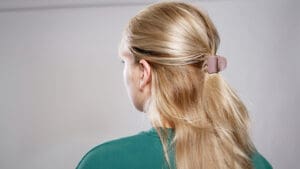
Clip-ins last up to 12 months with proper care. For everything you need to know, we suggest you read the Cliphair guide when installing, removing, and storing your extensions if you want them to last a long time. When you handle them carefully and store them properly, you can get a full year of use from their clip-in extensions.
You might not notice it often, but you can easily prevent clip-in extensions from slipping. In this guide, we will help you explore the reasons why extensions slip and possible solutions to keep them in place. Here’s some of the reasons your extensions may be falling out:
Correct extension prep is necessary before applying your extensions. You can use a texturising product or dry shampoo before placing the extensions. The best way to prevent slipping is to give your hair more traction during the day, which will also provide you with a smoother, more voluminous look. You can gently massage your hair at the roots where you have attached the clips, and this will improve the grip. The texturising products will provide a refined finish on even, smooth and recently washed hair. The product will firmly grip your hair and will prevent slipping.
For a smooth and refined blend with clip-in hair extensions, it is important to section the hair from the mid region properly to the crown and secure it with clips. Wearing extensions without sectioning can cause slippage and tangles, damaging the scalp and hair roots. It is therefore important to plan the application for full coverage and make sure that sections are thick enough for secure clip placement but not too thick to prevent slippage. Organising your hair into sections helps maintain a natural look, prevents tangles, and keeps the extensions in place. This method applies to all types of human hair extensions and is essential for achieving a flowing hairstyle.
You might be curious about whether certain products can help prevent slipping. The answer is yes, using some products for extensions can help keep clip-in extensions in place. Before you cut in your extensions, use a light-weight hairspray or texturising spray on your natural hair. This will increase friction and keep the extension clips firmly in place. To add more traction, you can also use a root-boosting powder. Remember to be careful when applying these products, as applying too much might make the hair excessively oily or sticky, which could, in turn, cause slippage of your extensions.
Try this trick if you have fine hair that tends to slip. For fine hair extensions, before attaching the clip, you can add two bobby pins in a crisscross pattern at the base of your hair section. This technique will form a string anchor point. Bobby pins are an additional way to support your hair extensions and help reduce the risk of movement. You can also opt for lighter choices, such as smooth, sleek extensions, rather than thick, heavier clip-ins for better suitability and functionality. Additionally, you can apply dry shampoo at the roots and gently tease to create traction for the clips if your hair is fine.
For your extension maintenance, try not to touch or adjust them more frequently, as this will prevent them from shifting throughout the day. Reposition the clips if you feel any movement or pain. A loose hairstyle, such as a bun or low ponytail, helps reduce excessive movement and friction. To keep your extensions smooth and blended, it is advised to keep a small comb or brush on hand for quick touch-ups.
If you’re concerned about the lifespan of clip-in hair extensions, you can use this guide to secure your extensions properly and help them last for a year or more if properly maintained. Above all, pay attention to careful handling, routine maintenance, and correct installation.
Read more:
Stop Clip-In Extensions from Slipping: Expert Tips