I’ve been playing golf for 20 years now, and yet I’m always amazed by how many new things I can learn.
This was my first full year on the equipment beat as GOLF’s Associate Gear Editor, so naturally, it was a year of lessons and “aha” moments.
Some were personal, such as determining the types of shafts that best fit my swing or the grind I should use on a wedge, while others, like the ones below, applied to anyone.
Keep reading below for my top gear takeaways from 2025 and how they might help your game in 2026.
We’ll start with an easy one here because I understood this intuitively, just not technically.
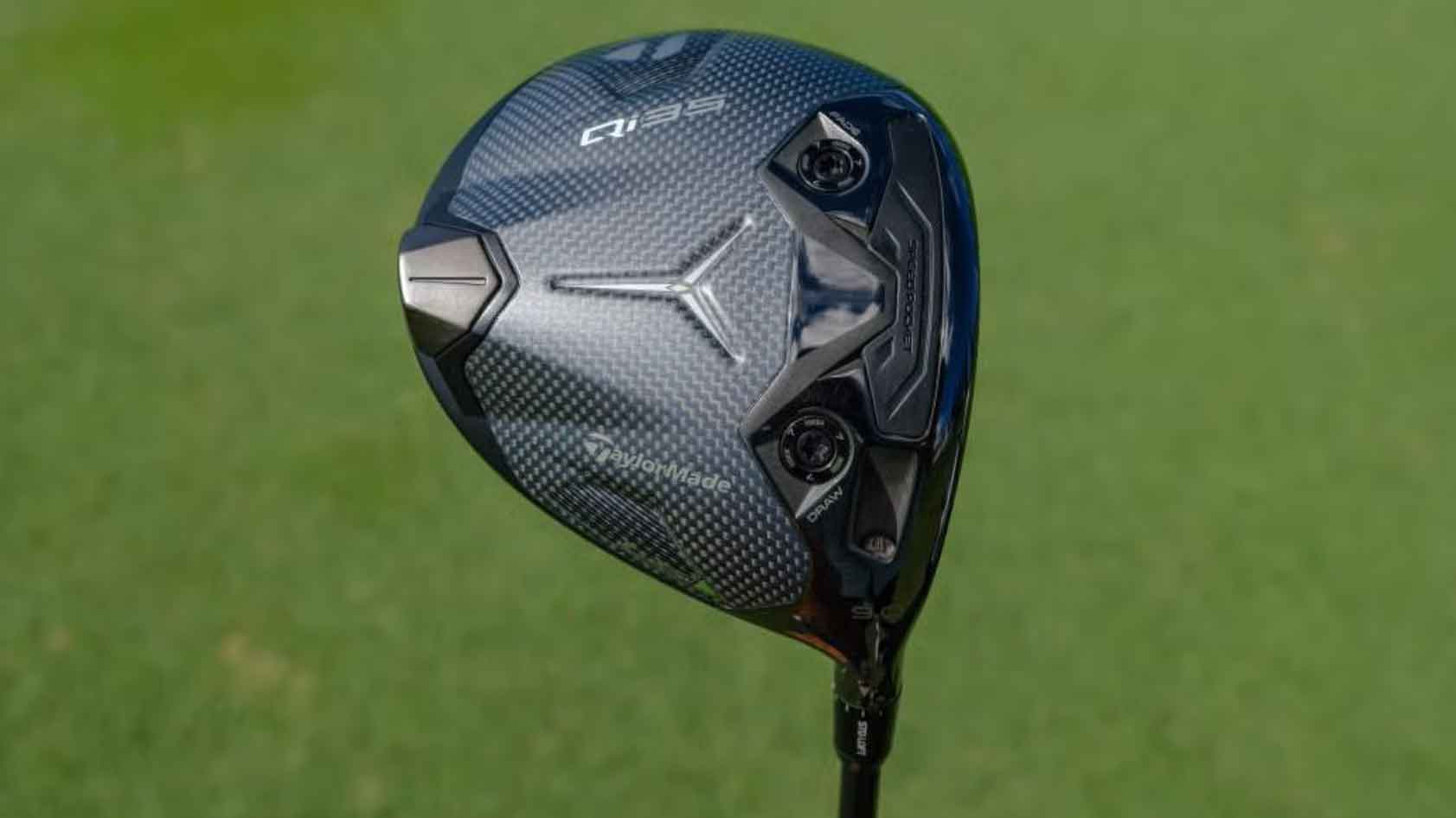
I always knew that modern adjustable drivers are set up to be closed and add loft, making them draw-biased. I also knew that you could adjust your driver head in the opposite direction and open it, de-lofting the club and making it fade-biased.
While my natural shot shape has always been a draw, for the last several years, I’ve played with my drivers slightly open. Turns out that’s how I’m supposed to do it!
You typically want to make your driver biased in the opposite direction of your natural shot shape. Face angle will influence the ball’s start line, so for a drawer of the golf ball, you want to start the ball out to the right (for a right-handed player) and work it back left.
How to set up your driver to hit a controlled fade
The inverse is true for someone who wants to fade the golf ball. They want to close the clubface to get the ball to start left and work back right.
You see this out on the PGA Tour a lot with draw-hitters like Rory McIlroy and Tommy Fleetwood, who both use higher-lofted 9- and 10-degree driver heads and turn them open, while cutters like Collin Morikawa and Scottie Scheffler use lower-lofted 8-degree heads and close the face to add loft.
So while I was already opening the clubface to take loft off, now I know why I liked it.
When you add loft to an iron, you might expect to launch it higher. But that’s not true for me.
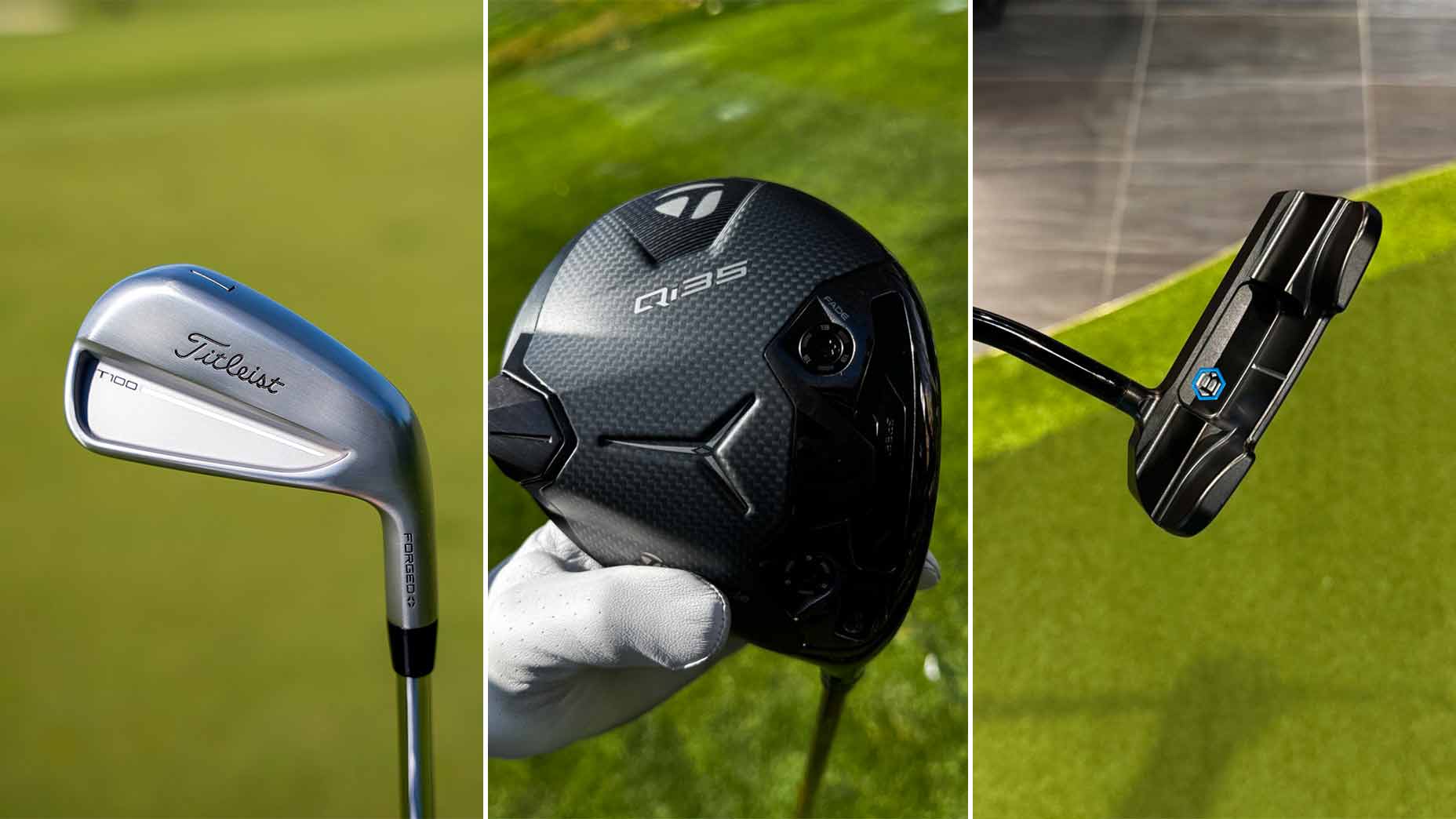
During my fitting for Titleist’s new 2025 T-Series irons, my fitter, Louis, discovered that when he took my irons from two degrees weak from standard, I actually launched the ball lower and far more consistently.
This is a great example of how being presented with a new piece of equipment can make you react differently, whether you know it or not.
What I learned is that when I’m presented with more loft — like the 35-degree 7-iron I am now playing as opposed to the 32-degree one I started the year with — I cover the ball better and come in with less dynamic loft, resulting in lower launch, but higher spin and higher peak heights.
That’s huge for consistency for me as well.
This is one that’s been out there for a while, but please ignore anytime you hear a salesman say a shaft is “low-launch” or “high-spin” or anything of that nature.
I’m a high-launch player who was always given “low-launch” shafts (like Ventus Black or Tensei White) to bring down my ball flight and spin, but it actually had the opposite effect. For much of 2023 and 2024, I was playing with a driver with just 7 degrees of loft to fight spin.
I made the finals of my club championship. Here’s how my gear helped me
But when I got fit at TaylorMade for the first time, I was put into the Ventus TR Red, which is marketed as a “high-launch” shaft, yet brought my launch and spin down to a better window.
My point is: Shafts may not actually control launch and spin as they are marketed to. A shaft is a timing mechanism and everyone’s swing times a little differently.
The important thing is finding a shaft that times up with your swing, not with one that’s marketed to achieve your desired ball flight!
I was a mini-driver skeptic. Now, this model has replaced my favorite club | I tried it
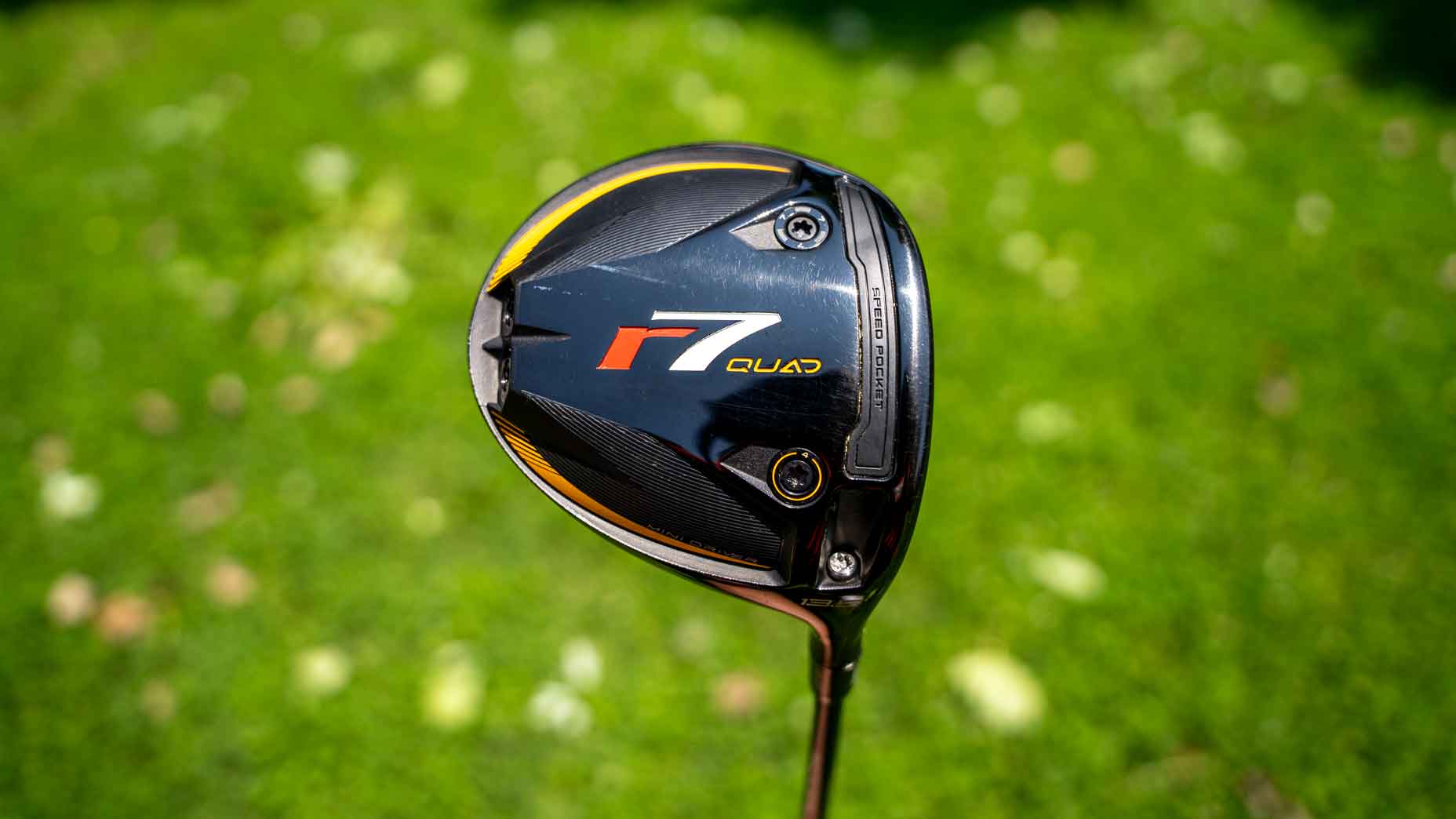
I was a mini driver skeptic when I first saw them come out, but then I actually started playing the TaylorMade R7 Quad Mini driver this spring and saw great benefits.
My mini driver gives me a club that I can swing with the forgiveness of a driver, but with the distance of a 3-wood.
Since I hit the ball far enough, I’m rarely using a 3-wood off the deck, so the 3-wood/mini driver place in my bag is almost strictly a tee club. I’m able to hit the mini off the deck, but that’s a rare use case.
At the end of the day, I prioritize off-the-tee performance from this spot in the bag and I’ve found it in a mini driver.
I really wasn’t sure what to put here because I was also a low-torque (or “zero-torque”) skeptic, but one is ending the year in my bag, too.
Though I never imagined playing with a low-torque putter, I learned I’m actually a very good candidate for one because I don’t have very much rotation through the stroke.
I’d started messing around with low-torque putters and decided upon an experiment: I’m going to use one until March and then switch back to see what it does to my putting stroke.
So far, the putting analysis I’ve done has showed that I’m a significantly more accurate putter with the low-torque option in the bag — so I might not be switching out come March, anyway.
Want to overhaul your bag for 2026? Find a club-fitting location near you at True Spec Golf.
The post My 5 gear takeaways I learned in 2025 and how they can help you in 2026 appeared first on Golf.