
Weird Weekend is our regular Saturday column where we celebrate PC gaming oddities: peculiar games, strange bits of trivia, forgotten history. Pop back every weekend to find out what Jeremy, Josh and Rick have become obsessed with this time, whether it's the canon height of Thief's Garrett or that time someone in the Vatican pirated Football Manager.
There was a specific moment while playing Diffusion where it shifted from being merely a highly capable Half-Life mod to one of the most remarkable conversions of Valve's classic FPS I've ever played. It's a moment reminiscent of Xen's reveal in Crowbar Collective's remake of Black Mesa, a sense of wonder imbued in equal parts by the sci-fi vista placed before you and the fact you know that it's running on the technical equivalent of a restored 1930s sedan.
Then, several hours later, Diffusion did it again, at which point I began to understand why it took ten years to make.
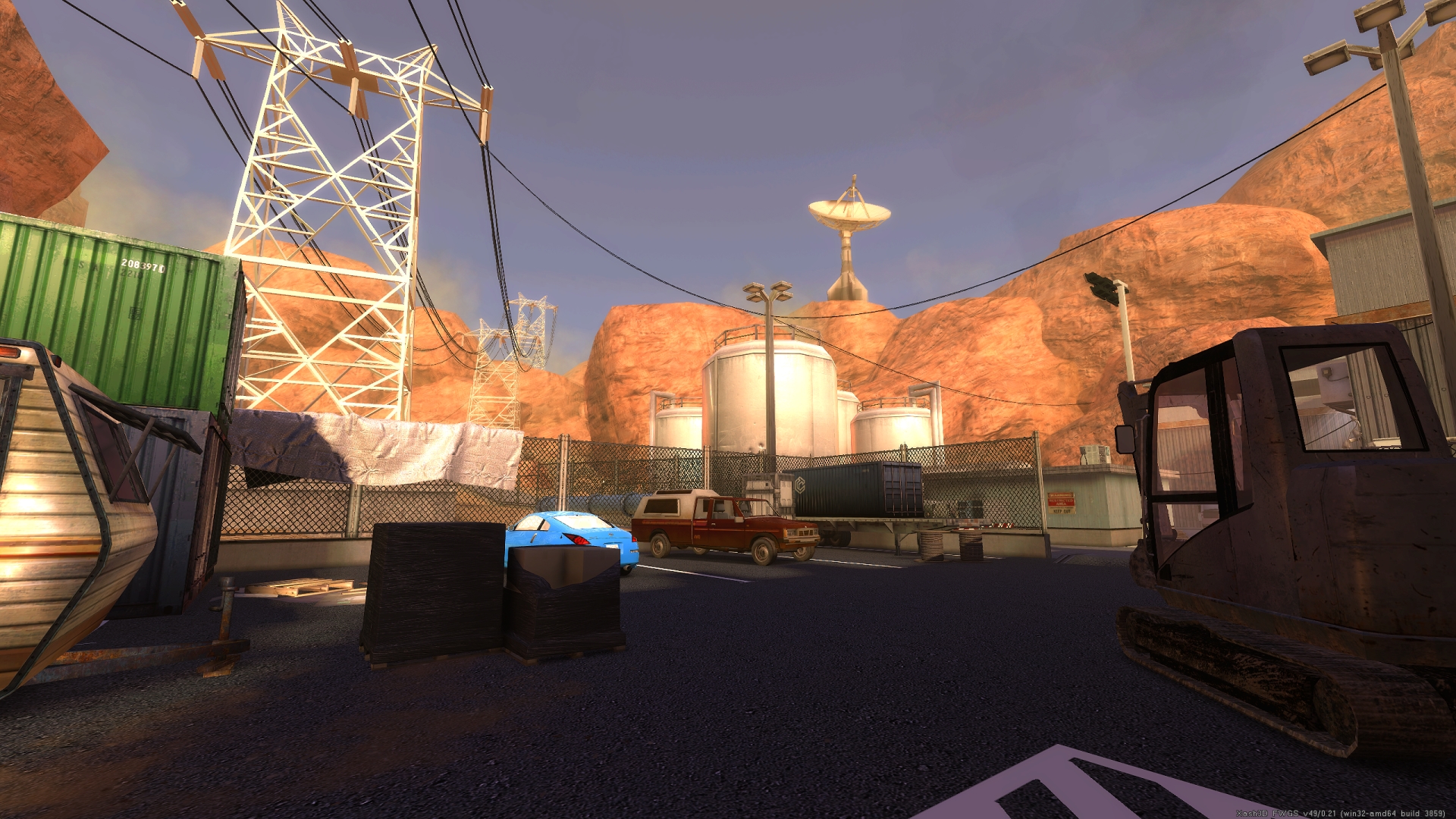
Diffusion is a total conversion project for Half-Life that's built in Xash3D, an open-source engine fully compatible with Half-Life's underlying GoldSrc tech. While Xash has similar fundamentals to GoldSrc, it isn't bound by the same constraints as Valve's tech, natively supporting features like HD textures and dynamic lighting. It also lets users build games that run from their own launcher, which apart from anything else makes Diffusion incredibly easy to download and get playing.
The premise is typically daft Half-Life mod fare. You play as James Smith, a veteran SWAT officer on a road-trip holiday through the Utah desert when his car breaks down just outside an old processing factory. Said factory turns out to be a front for an underground research facility, which comes under attack by a hostile military force just as Smith saunters over to ask if he can use the phone.
Fleeing into the facility, Smith stumbles upon a prototype battlesuit that lets him regenerate health, dash like the Doom Slayer in his Eternal era, and fry nearby enemies with an electrical AOE attack. But stealing the suit also puts Smith at the centre of a vast, dimension-hopping conflict. Still, it could be worse, he could have gone to Center Parcs.
As you can probably glean from the summary, storytelling is not Diffusion's forte, and the ensuing narrative is tropey and clumsily told. But Diffusion doesn't exist to spin a memorable yarn. This is mainly an ode to late '90s-era level design, when the abstract mazes of early 3D shooters had begun to coalesce into more recognisable forms, able to convincingly replicate a kitchen, or—wait for it—go outside.
The first of Diffusion's five chapters plays like a Black Mesa remix, a blend of clinical combat challenges and maintenance-based puzzles threaded through science labs, warehouses, admin offices, and server rooms. Yet even here, there are moments to make any Half-Life fan coo in admiration.
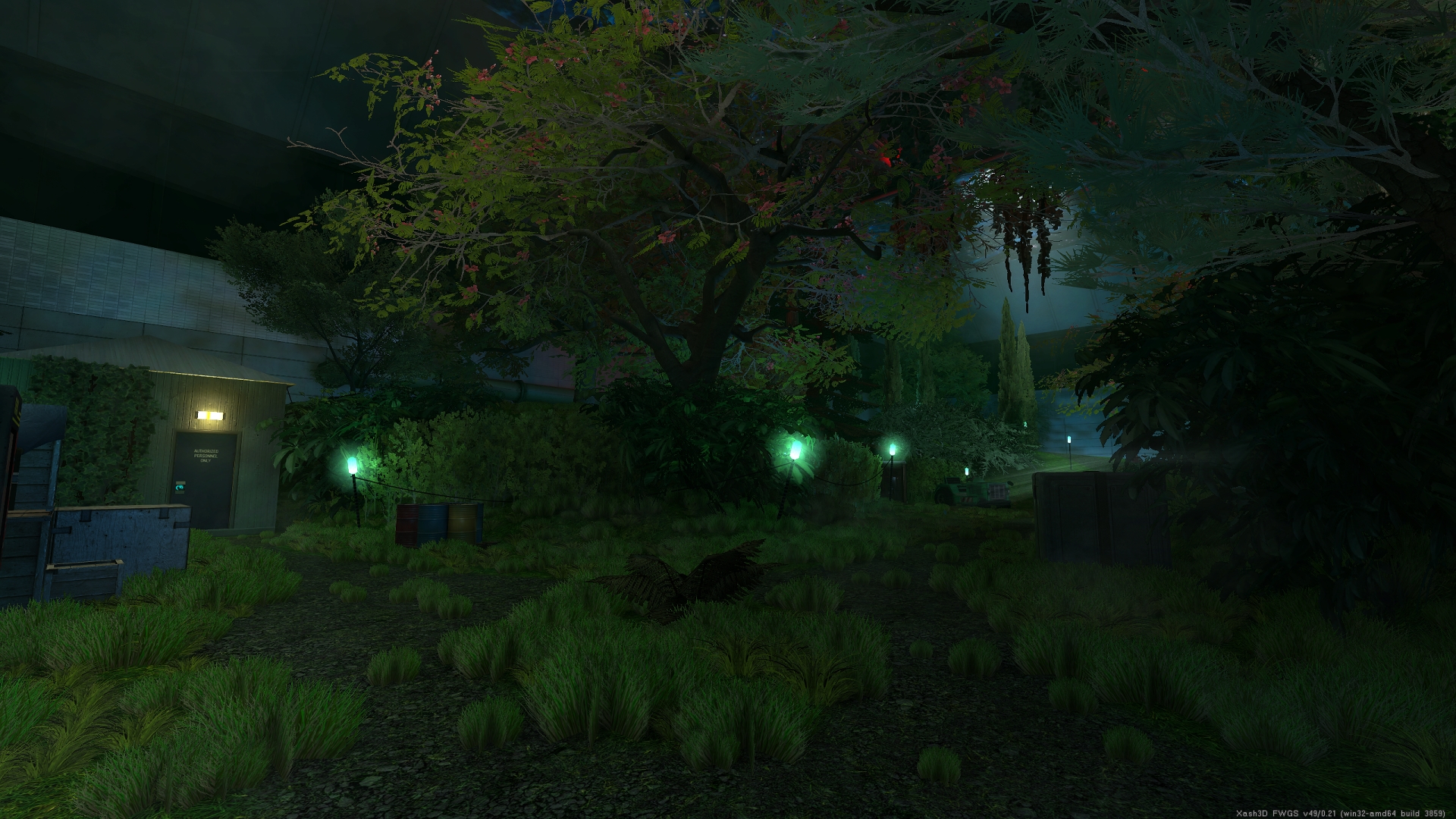
An early section involves working your way through an organics lab, at the centre of which is a large, artificially grown rainforest, featuring some impressively sculpted vegetation considering the tech being used. And even the most basic maintenance corridor is sculpted with precision and sprinkled with little details, like discarded coke cans or little rest alcoves with patterned sofas and vending machines.
Everything looks significantly snazzier than it does in the original Half-Life too. Weapon models and animations, for example, wouldn't look out of place in a modern Call of Duty. Beneath this, though, the combat is recognisably Half-Life in its binary gunfights and grenades that refuse to throw properly. Diffusion strips out most of the alien combat, however, with battles mostly taking place against lethally accurate marines and those backflipping spec-ops ladies who love to play hide and seek.
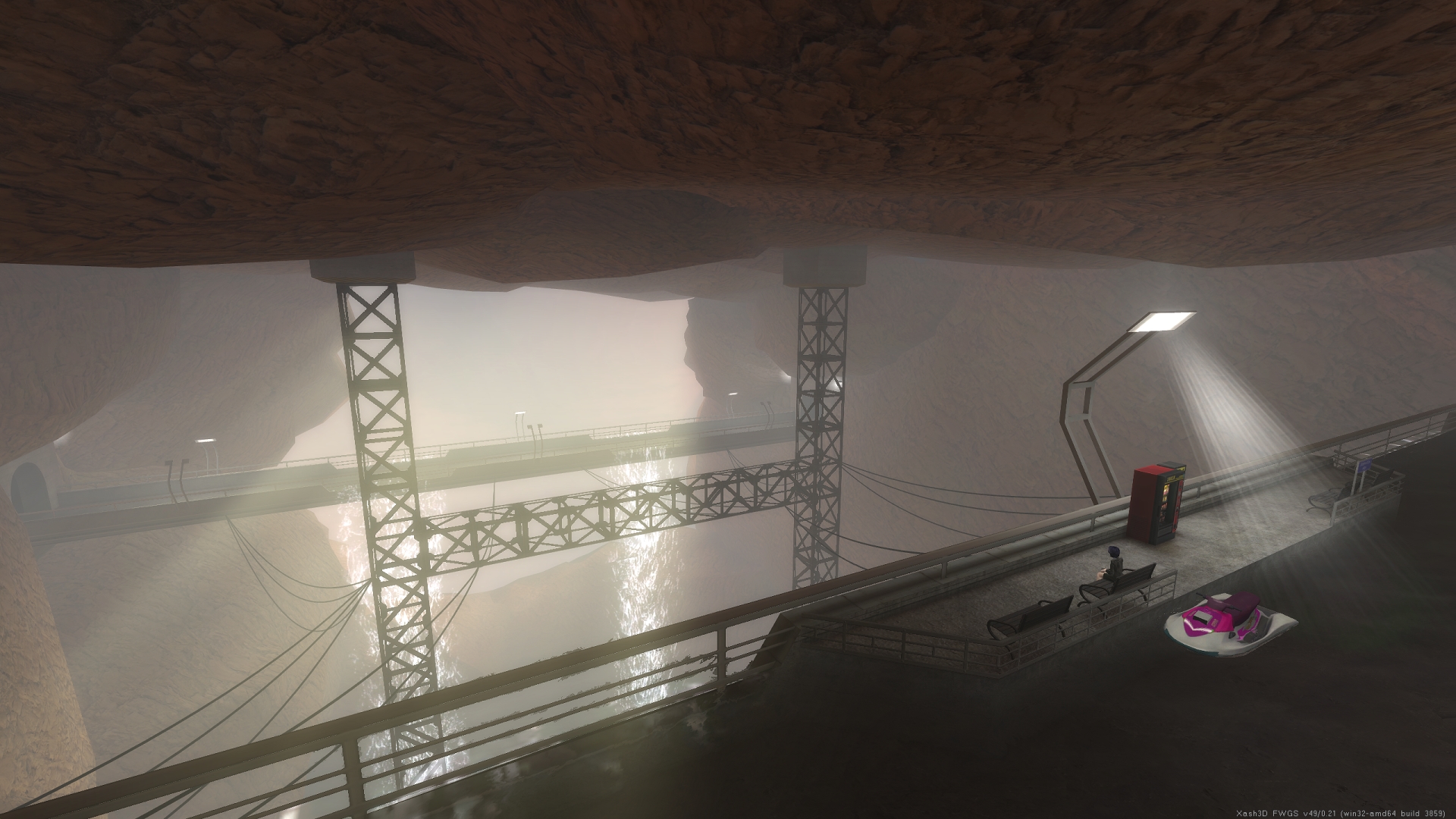
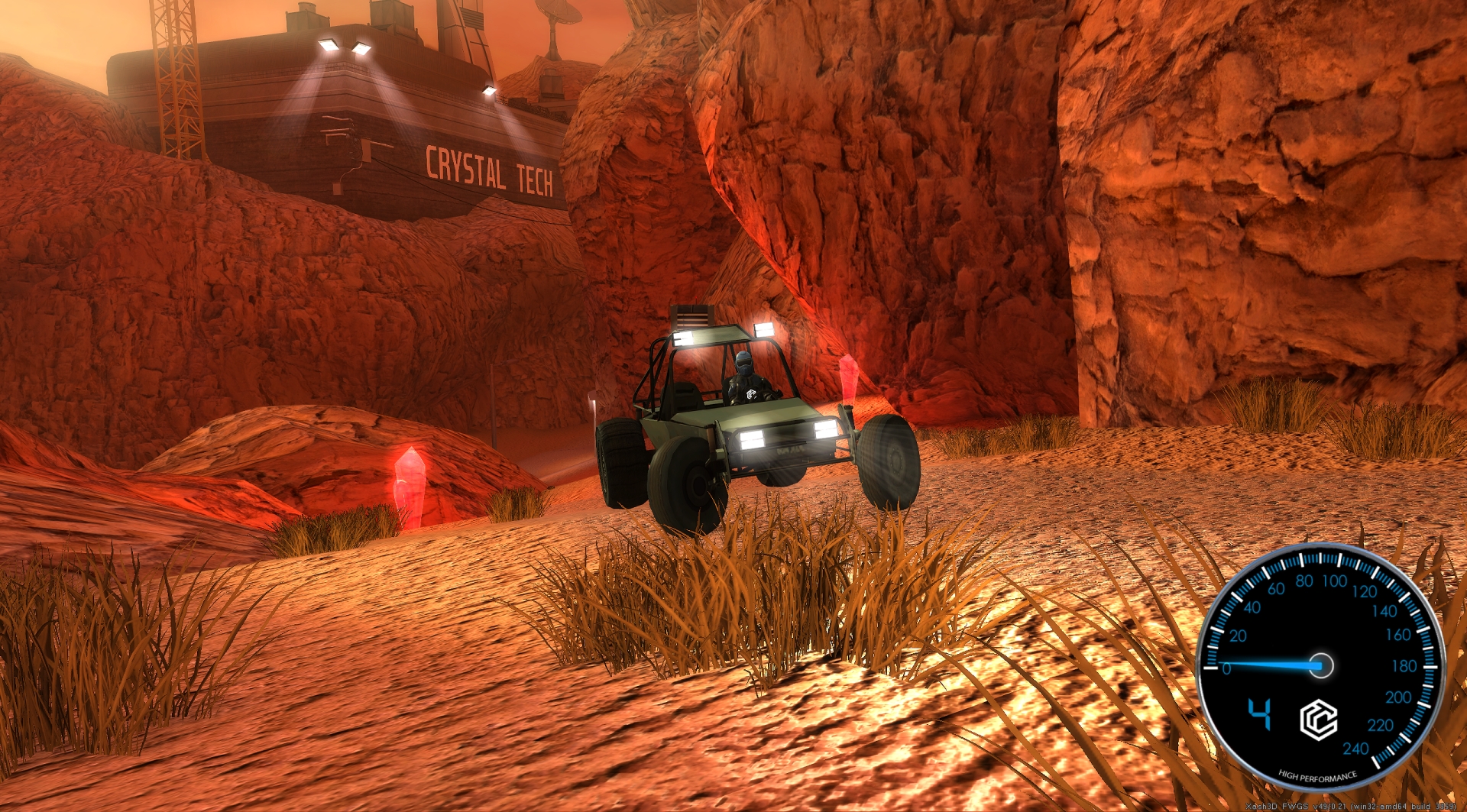
Diffusion's second chapter—which sees Smith transported to an alien plain called the Red Dimension, feels largely similar to the first. But it begins to stretch its design legs as you approach its conclusion. The latter part of the chapter involves driving between multiple signal towers across a large, rocky expanse of alien desert, with fully functional rocket buggies and Humvees. There's even a jet ski you use to navigate a subterranean river.
Such drivable vehicles would have been next to impossible in vanilla Half-Life. But what's more impressive about Diffusion's vehicles is they are actually fun to drive, with intuitive handling and proper suspension. It's also fun to run over marines at high speed, triggering that unforgettably Half-Life splat of a character model bursting like a microwaved sausage.
Yet while I enjoyed Diffusion up to this point, it didn't feel wildly different from Half-Life mods I'd played before. Were it not for the custom weapons and the lack of headcrabs, it could easily be another apocryphal tale from the Black Mesa incident. But that all changes with chapter three, where Smith is transported to the Blue Dimension.
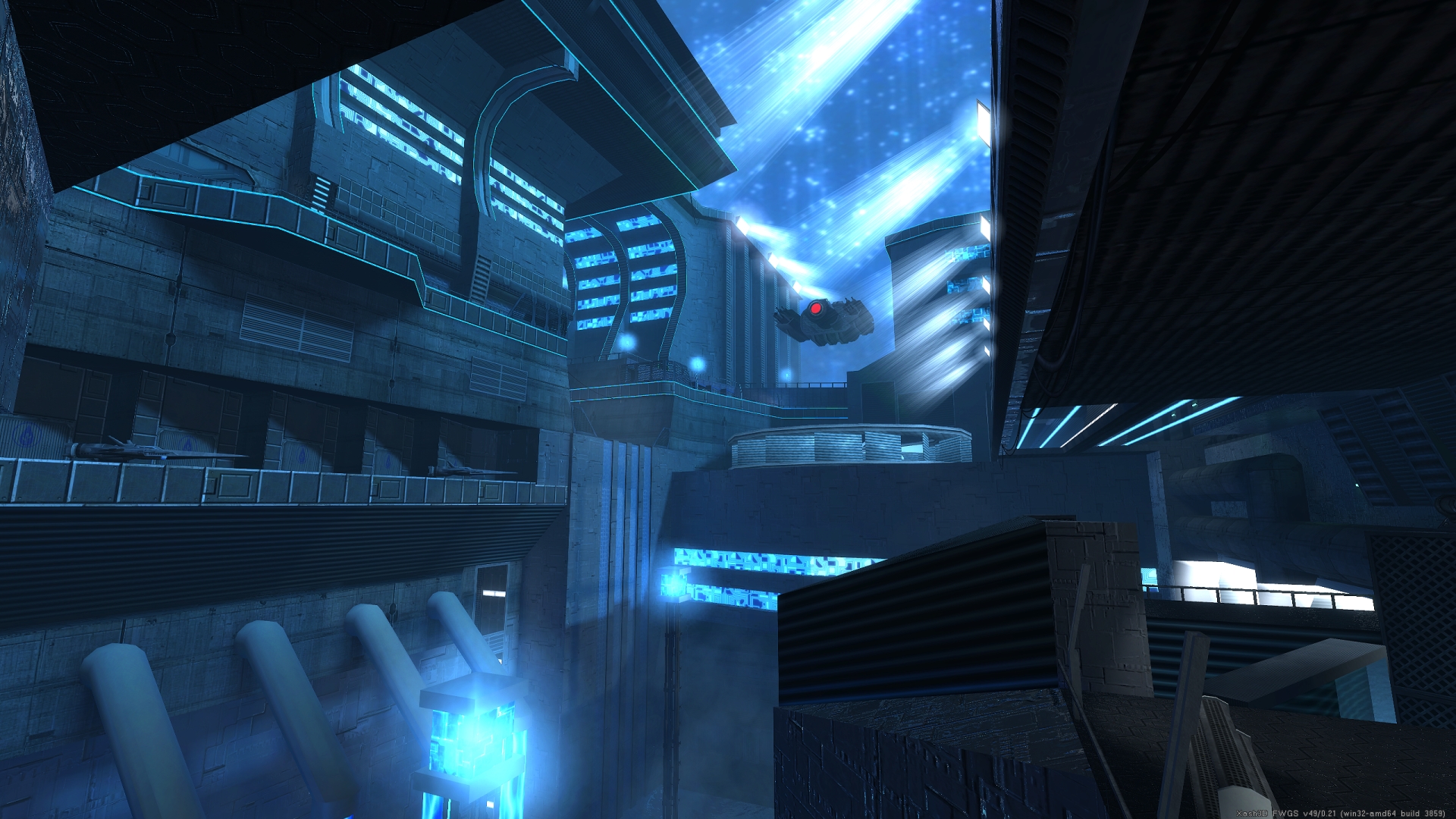
Unlike the Red Dimension, which is just a slightly colour-shifted reimagining of Utah's desert, the Blue Dimension is a sprawling alien metropolis ruled by a virus-infected AI and prowled by killer robots. The opening cutscene goes all-in on overawing you with its fiction, with Smith paraded along a street imprisoned in a glass tank, surrounded by colossal, ice-blue megastructures.
And while there's plenty of corridor combat in the ensuing chapter, it never loses sight of its extraterrestrial grandeur. You're constantly treated to glances of the cityscape through windows and exterior sections, while the interiors are often as vast and peculiar as the exteriors. But that alien feel is also baked into the structure of levels, with portal-doors and elevators cleverly deployed to Euclid-defying effect.
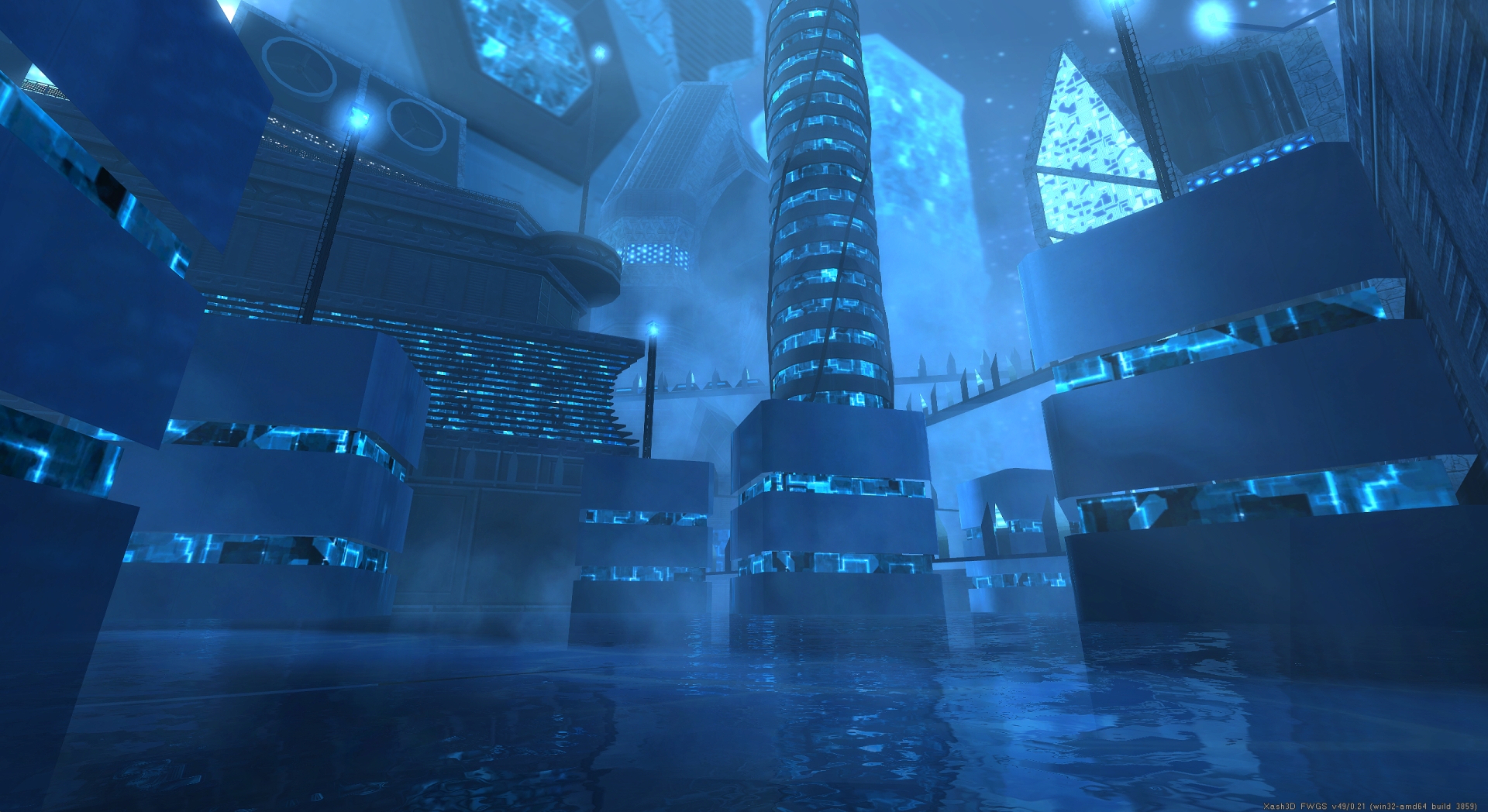
Even the combat steps slightly away from the Half-Life mould here. Your human weapons are replaced by a rapid-fire plasma gun that can also shoot bouncing orbs a-la Half-Life 2's Overwatch cannon, and a charged sniper rifle that instagibs whatever it hits. Meanwhile, your robotic foes are equipped with their own motley arsenal. The result is that fights often look more like Halo than Half-Life, though Diffusion can't quite shake the austere, dispassionate feel of the latter's combat.
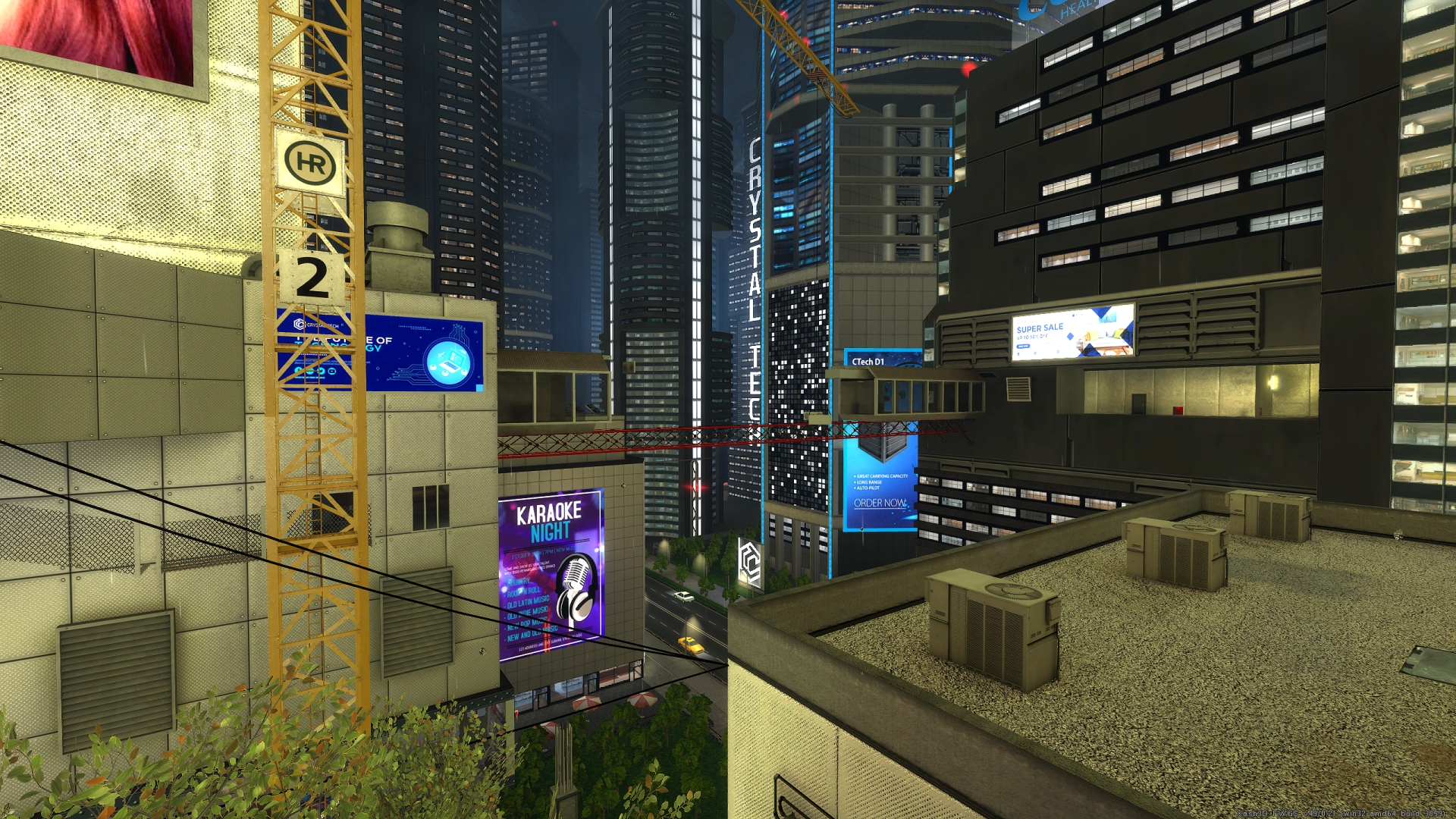
Nonetheless, the whole chapter is a blast, and probably the high point of the adventure. But that doesn't mean Diffusion is finishing wowing you. Once you've successfully navigated the Blue Dimension, you're transported back to Earth. Instead of returning to the Utah desert, you instead arrive in Mega City, a towering cyberpunk metropolis.
Here, you battle across rooftops and through industrial sites, surrounded by a dazzling urban backdrop of huge skyscrapers, animated billboards, and holographic advertisements that stretch toward the stratosphere. While this chapter is a little too short to match the brilliance of the third, simply watching the backflips it performs using an engine with Quake in its bones is never less than thrilling.
As you can probably tell, I like Diffusion a lot. But there is one big caveat. Diffusion uses AI generated voices for its characters. I've zero tolerance for generative AI "art" even when it gets the fingers right, but even if I were to put aside my ethical standpoint on the matter, it wouldn't change the fact that Diffusion's voices are shit. They are plainly robotic, littered with bizarre phrasing and inhuman intonation. It means any character who opens their mouth immediately begins to detract from the experience.
Normally, I'd write a game off under such circumstances, no matter how much or little it cost to make or buy. However, Diffusion's developer, who goes by Aynekko, has stated that the voices are "currently being rerecorded" with human voice actors. These will be added into Diffusion "for the next or after the next update".
This makes Diffusion a lot easier for me to recommend—though I would suggest you wait until the human voices are implemented, as they're guaranteed to improve the experience. Moreover, if a solo developer of a free Half-Life conversion can implement human performances into their work, it leaves no excuse for corporations worth billions to slop out AI garbage.
I can't wait for that update, not least because, voices aside, Diffusion is such a great testament to human endeavour. You can see the time and effort poured into it in every agonisingly modelled tree, every moodily lit hallway, every painstakingly photoshopped advertisement. Sometimes you'll play a game that took a decade or longer to make and think "really?" (I'm looking at you, Duke Nukem Forever). But with Diffusion, every minute of its creation is evident in the final product.