As the old saying goes, you can't have your cake and eat it, too. And that's a shame, because I was quite looking forward to this Logitech-flavoured one.
Not too long ago, Logitech revised its longstanding low-profile keyboard lineup with a new G915 X Lightspeed model and the cheaper G515 Lightspeed TKL option, both of which I've looked at in the past. Both of those keyboards were in the Swiss brand's more traditional wheelhouse, opting for a conventional low-profile switch, plus creature comforts such as solid build quality and fast wireless connectivity.
The all-new G515 Rapid TKL isn't in that wheelhouse, though. Its switches are no longer standard low-profile mechanical ones, and instead are low-profile magnetic analogue ones. That means all the fun of rapid trigger and its clever software trickery into an already short and snappy travel.
I'll get to those switches in a minute. As I mentioned a minute ago, this keyboard is an example of the Logitech-flavoured cake being given to you but not consumed, in that it sacrifices any form of wireless connectivity. Say goodbye to Lightspeed, chaps, as it isn't here, which is a real shame. At least it works plug-and-play, I suppose.

Switch type: Logitech magnetic analogue
Keycaps: PBT, doubleshot
Lighting: RGB, controllable in software
Onboard storage: None
Extra ports: None
Connection type: Wired-only
Cable: USB Type-C/USB Type-A, detachable
Weight: 0.8 kg/1.76 lbs
Price: $170/£140
Nonetheless, the switches are the important change, which gives the G515 Rapid TKL its 'rapid' moniker. Being magnetic switches means they're very similar to more full-size iterations seen in many of the best Hall effect keyboards, although the added benefit of the ones here is that they have a shorter travel all the time, being low-profile and all.
The general point is that these switches are much more configurable than the more standard low-profile mechanical switches you'll find in Logitech's other low-profile keyboards, having customisable actuation and reset points. This means you can choose how far down the switch's travel it registers an input and resets, giving you much faster keypresses than classical switches with fixed points for both.
With these switches, you can customise actuation and reset points in 0.1 mm intervals in Logitech's G Hub software. Doing so is remarkably easy, and within a few clicks, I'd applied it to movement, weapon selection and the crouch keys in Counter-Strike 2 for ultimate speed. As much as you feel the speed benefit of low-profile switches against full-size ones in a more general sense, the move to rapid trigger-capable ones yields a greater benefit in competitive shooters, for instance.
In my varying rounds of Counter-Strike 2, I was impressed with the responsiveness of the G515 Rapid TKL's switches due to those adjustable actuation points. Indeed, the fact that the switches are linear and have a very smooth keypress helps with that responsiveness.
I wasn't so mad keen on using this keyboard for general productivity and work stuff, though. For whatever reason, the switches in the G515 Rapid TKL fall into the old trap of magnetic switches feeling quite hollow. I never found myself feeling particularly comfortable using them for an extended period in the last couple of weeks, choosing to switch back to more familiar territory.
Of course, as well as the powers of adjustable actuation points and rapid trigger, this Logitech keyboard is endowed with the software trickery we've come to expect from a gaming keyboard in 2025. These include generally useful stuff such as dynamic keystroke, where as you go down the switch's travel, it can map several inputs—for instance, you could start by walking, and then as you continue further down the travel, you could crouch, or run.
Plus, you get the SOCD tech (Simultaneous Opposing Cardinal Directions or Snap Tap, as Razer likes to call it) tech for unnaturally quick side-to-side movement that'll get you banned in online CS:2—when opening up the menu for its configuration in Logitech's software, it plainly states you risk getting banned.
Otherwise, Logitech's G Hub provides the usual fare of configuring the keyboard's RGB lighting and remapping keys. The key remapping is particularly powerful, given the presence of the magnetic switches, as you can even add modifier keys to either a first or second keypress on any given key. That comes in conjunction with a base, function, and the G-Shift layer, meaning you can almost have ten different inputs per key if you wanted to.
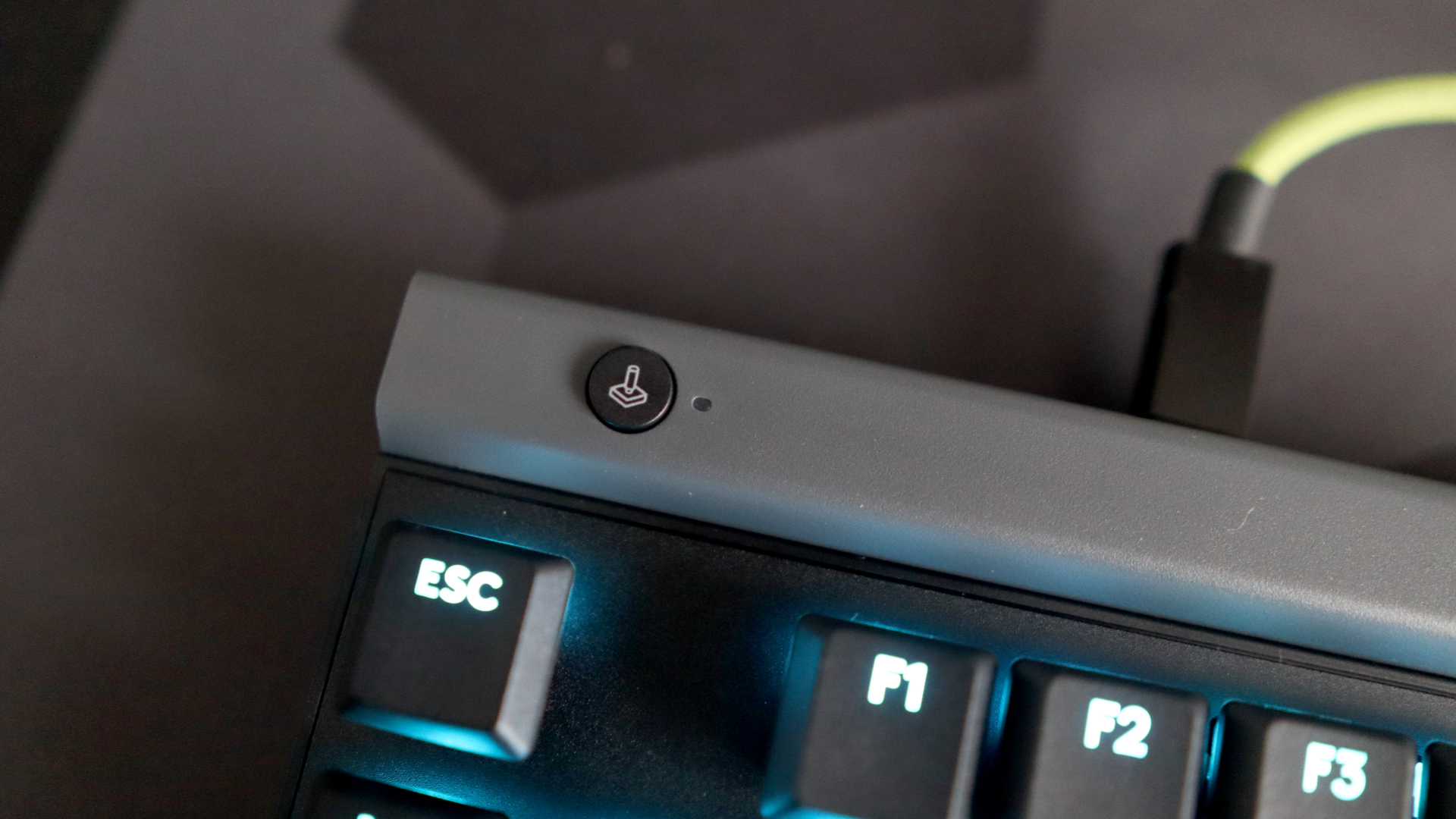
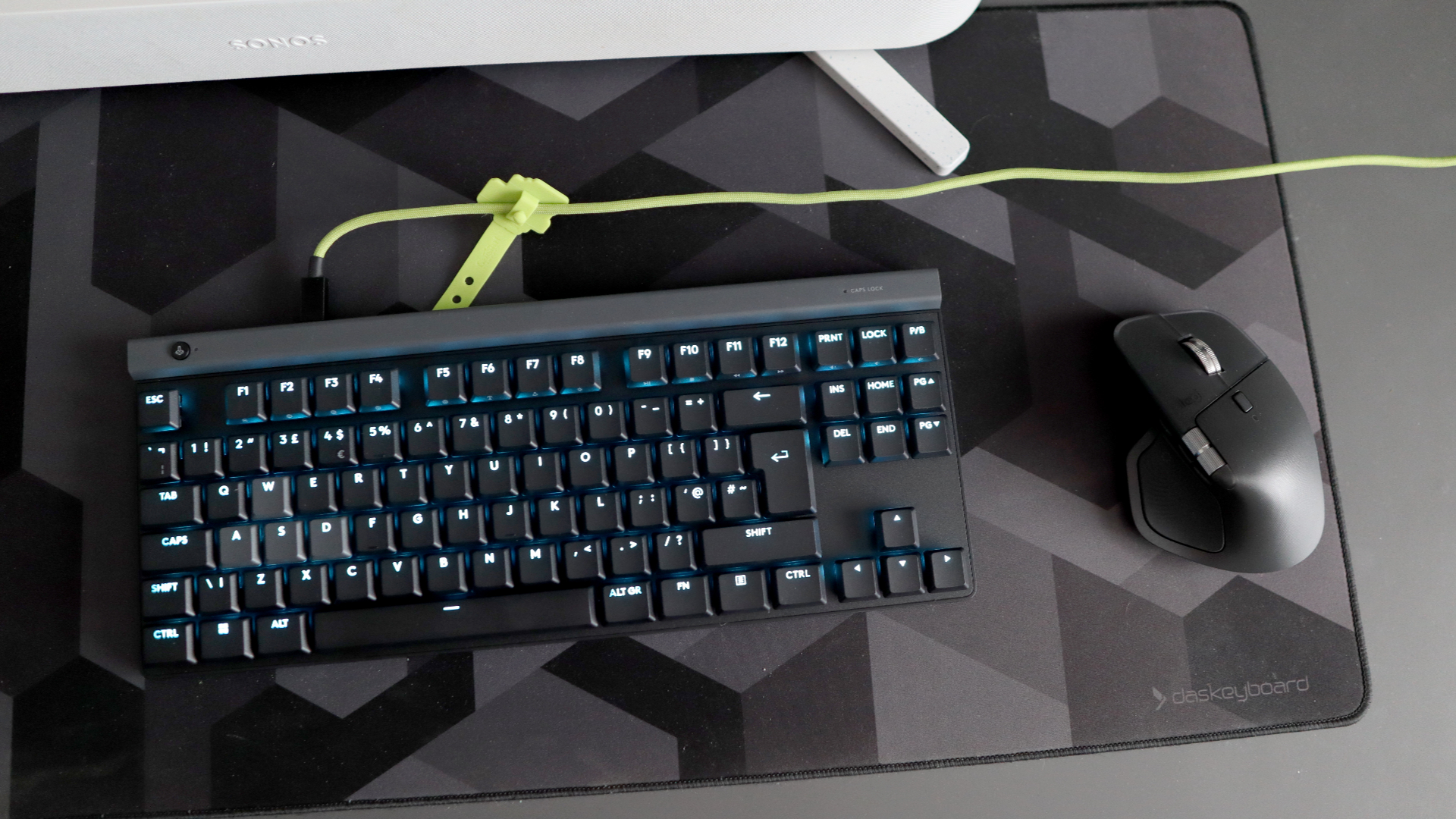
Where the G515 Rapid TKL hasn't changed from its Lightspeed brother is the actual fit and finish, which is not really a bad thing. I liked how this keyboard felt in its first version, with a sensible and space-saving TKL layout that isn't too jarring if it's your first SFF keyboard, as you only miss out on the number pad. Other keys haven't been moved around or changed, as with smaller layouts that'll take some getting used to—I'm looking at you, beloved HHKB.
The entire chassis here is plastic, meaning it lacks the premium fit and finish of rivals such as the smaller NuPhy Air60 HE, although there isn't any flex to the chassis. When taking it out of the box for the first time, I noticed a surprising amount of heft to the G515 Rapid TKL, which was a welcome surprise. The keycaps here are textured PBT, providing an extra dose of quality.
Its two-tone colour scheme is quite pleasant, with my sample shipping in black. This Logitech keyboard is predominantly black, although there are silver accents across the top and on the WASD keys. This used to be quite common for gaming keyboards, and seemed to fall out of favour some time ago, so it's pleasant to see it make a return.
I realise I've gotten through this entire review and not even mentioned the price of the G515 Rapid TKL. I'll give you a couple of minutes to guess before revealing….okay, had enough? It's $170/£140. For a wired-only low-profile gaming keyboard, even one with rapid trigger powers, that feels quite expensive for the plastic package on offer.
For reference, while the NuPhy Air60 HE trades some keys for a smaller layout, I think it looks nicer with its purple and silver colour scheme; it has even more powerful rapid trigger switches, plus the benefit of an 8000 Hz polling rate for even more frequent reporting (ideal for pro players) and it's between $30 and $50 cheaper than Logitech's option.
✅ You want a potent low-profile gaming keyboard: The G515 Rapid TKL impresses with fast and responsive keypress through its combo of low-profile magnetic switches.
❌ You want wireless connectivity: It's a shame Logitech cut wireless connectivity from this keyboard against its predecessor, especially with its higher markup.
At this price, we've also got to consider the likes of the Wooting 80HE, which gives you full-size switches rather than low profile, a cooler aesthetic, and the powers of progressive, controller-like inputs, as well as all the stuff Logitech is offering here. That's in and around the same price tag, and is a bit more feature-rich.
Likewise, the beloved Keychron K2 HE sits at $140 or so, so it is cheaper than Logitech's choice. It brings in full-height magnetic switches for rapid trigger functionality, plus a smart aluminium or wooden case, and most importantly, it can connect wirelessly. So, it is possible to have your cake and eat it—just look at Keychron.
Oh, and I didn't even mention the ridiculous value Gamakay x NaughShark NS68, whose $50 price point with rapid trigger and 8000 Hz powers, plus PBT keycaps and a small form factor layout, speaks for itself.
The Logitech G5215 Rapid TKL sits in a little bit of an awkward place, then. This is a good, rapid trigger gaming keyboard, and I like how convenient its software is and how fast it feels, but a plastic chassis and solely wired connectivity do leave a little bit of a sour taste.