
The MSI Forge GK600 is a tenkeyless (TKL) gaming keyboard, meaning it's missing the numberpad. But Katie, I hear you say, if a normal keyboard has all the keys you could ever want, what's the point getting rid of them in favour of a TKL board? Well, friend, it's all about real estate and maneuverability. And cash, of course. But isn't everything? Say you've spent all your cash on the best gaming PC and you're now stuck with a teeny tiny desk. A TKL board nets you more desk space so you can stack plates and coffee cups beside it to your heart's content, or whatever else you're draping over your battlestation.
With the MSI Forge GK600, you're killing two birds with one stone: saving space on your desk while also protecting your dragon's hoard of gold. Let's get into what makes the Forge GK600 special and, of course, what doesn't.
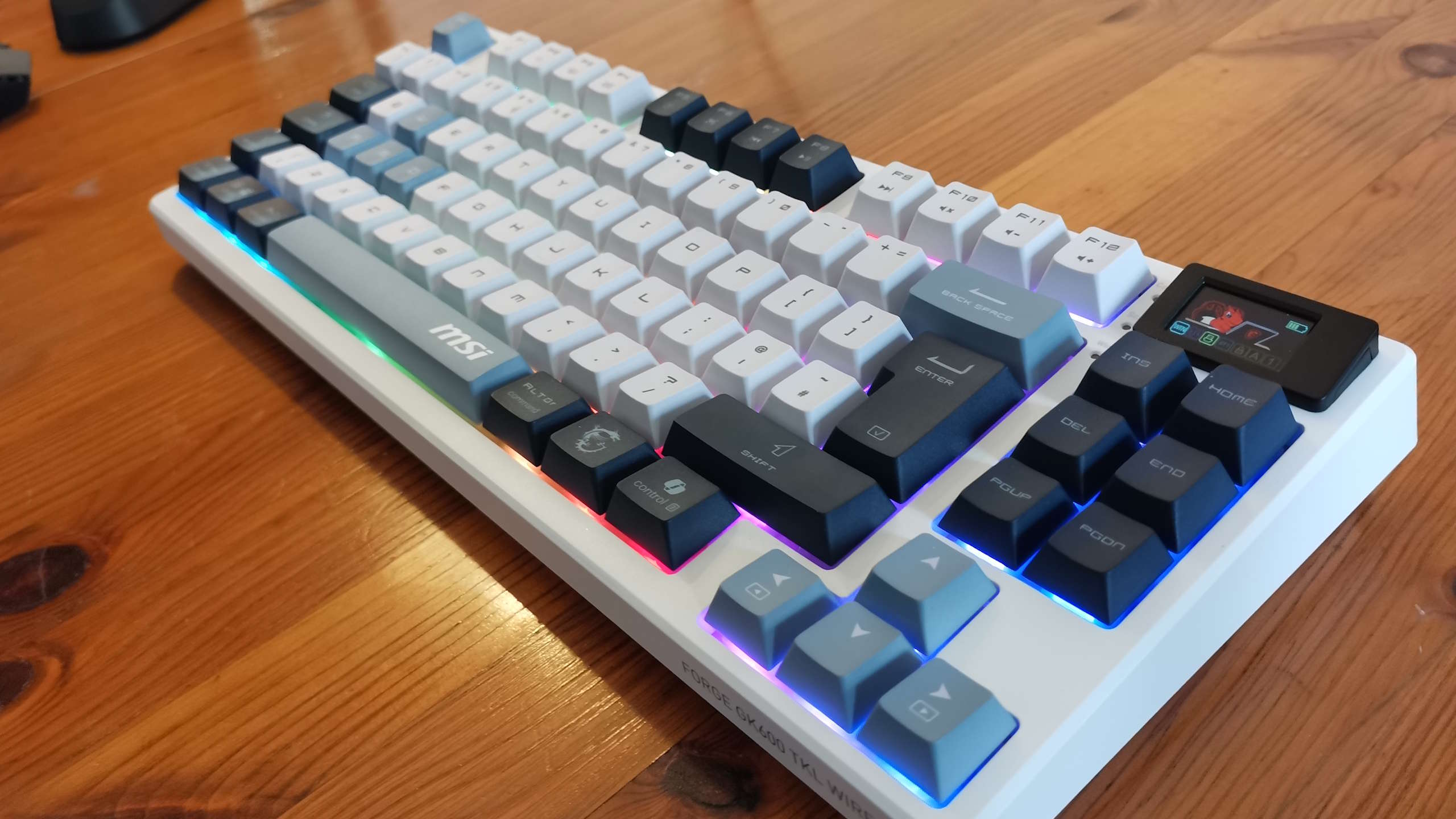
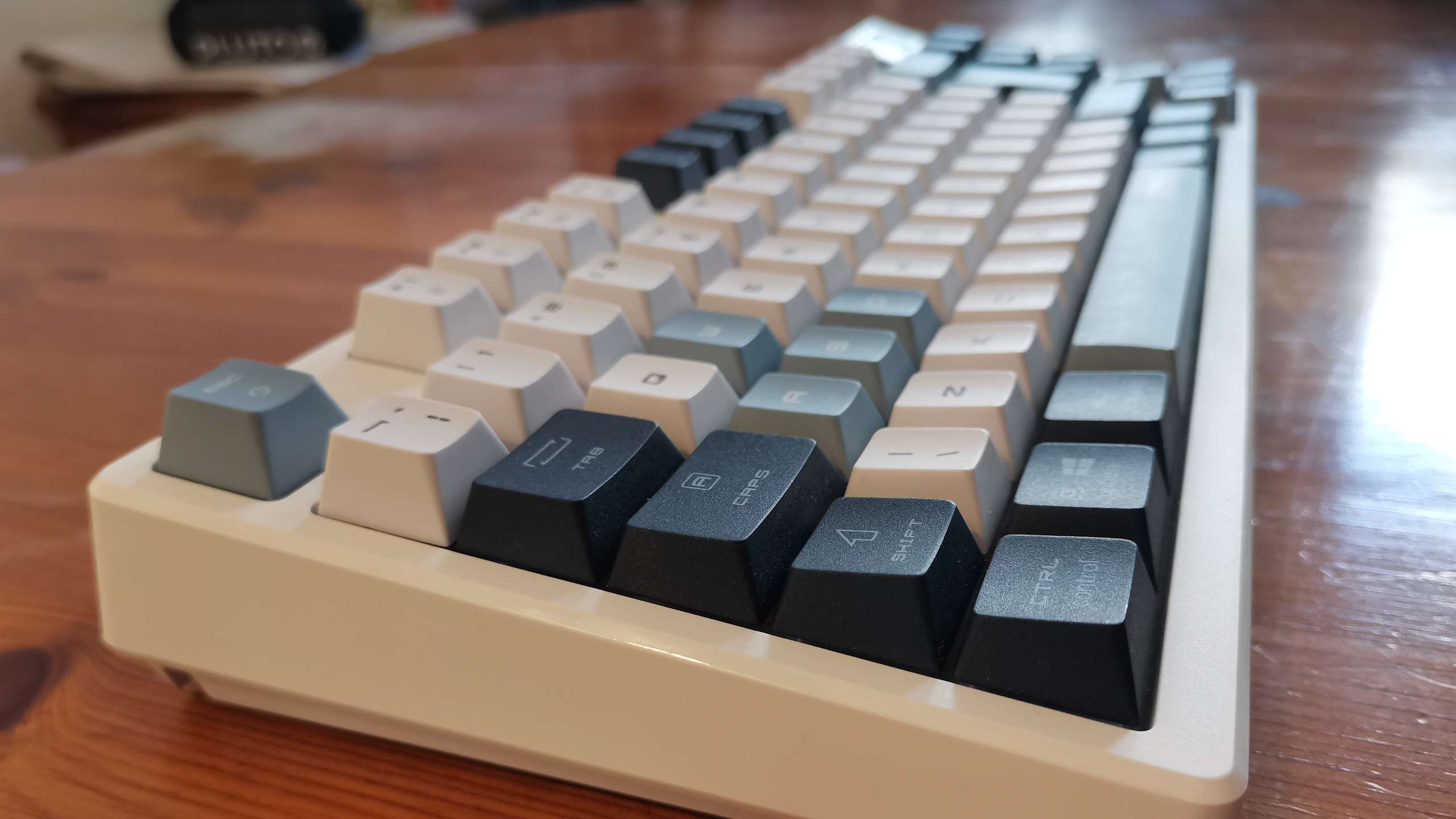
Sitting somewhere in the region of a 75-80% layout, the Forge GK600 takes up less space without sacrificing as much productivity as the super compact layout of something like the 60% NuPhy Air60 HE. Its dedicated navigation and direction keys aren't being swallowed up by the mass of other keys, so you don't need to fumble around for them, while the two-column layout of the navigation section keeps it from extending into your valuable mousepad space. There's no programmable macro keys, but you still get use of 12 F-keys at the top.
I'm not a huge fan of the Delete key being dead center of the left column as a person who spends most of their time re-hashing walls of text. It initially left many a paragraph lost to an erroneous page-up/insert keystroke, but didn't take long to get used to the odd positioning.

Size: Tenkeyless
Switches: Mechanical linear, hot-swappable (5 pin)
Key caps: Dye-sublimated PBT
Backlighting: Per key
Anti-ghosting: N-key rollover
Polling rate: 1,000 Hz
Dimensions: 32 x 13.5 x 3.5 mm
Weight: 943 g | 33.2 oz
Connections: 2.4 GHz | USB Type-C | Bluetooth
Cable: 180 mm
Battery life: 26 hours with lighting
Features: 1.06-inch LCD display
Warranty: 2 years
Price: £74/$90
In place of dedicated media controls, like the lovely programmable dial of the Corsair K65 Plus, MSI has opted for a funky little display in the top right corner. I thought it was just a flashy solution for indicator LEDs so you know what you're connected to, whether that's via Bluetooth, wireless, or a wired connection, and if you're about to type in caps or have accidentally locked your Win key.
The display had felt completely unnecessary until I realised it has a full menu of lighting profiles and other goodies in there. There are loads of great lighting effects to scroll through. While that makes the screen slightly more useful, and omits the need for software, I'd personally rather it not waste what little battery life there is. Especially as that's the major drawback of the whole package for me.
I got an RGB-lit battery life of just 24 hours out of the Forge GK600—around three days of gaming and working, on and off. That's not the worst battery life I've seen on a gaming keyboard, but it's a darn sight shorter than something like the Keychron K2 HE's 74 hours with RGB enabled. Switch off the lights, and MSI reckons you'll get 20 days out of it. Assuming you're at your keyboard 8 hours a day that's around 160 hours, which is still less than half the 240 hours unlit that the Keychron offers. Then again, the prices do scale accordingly.

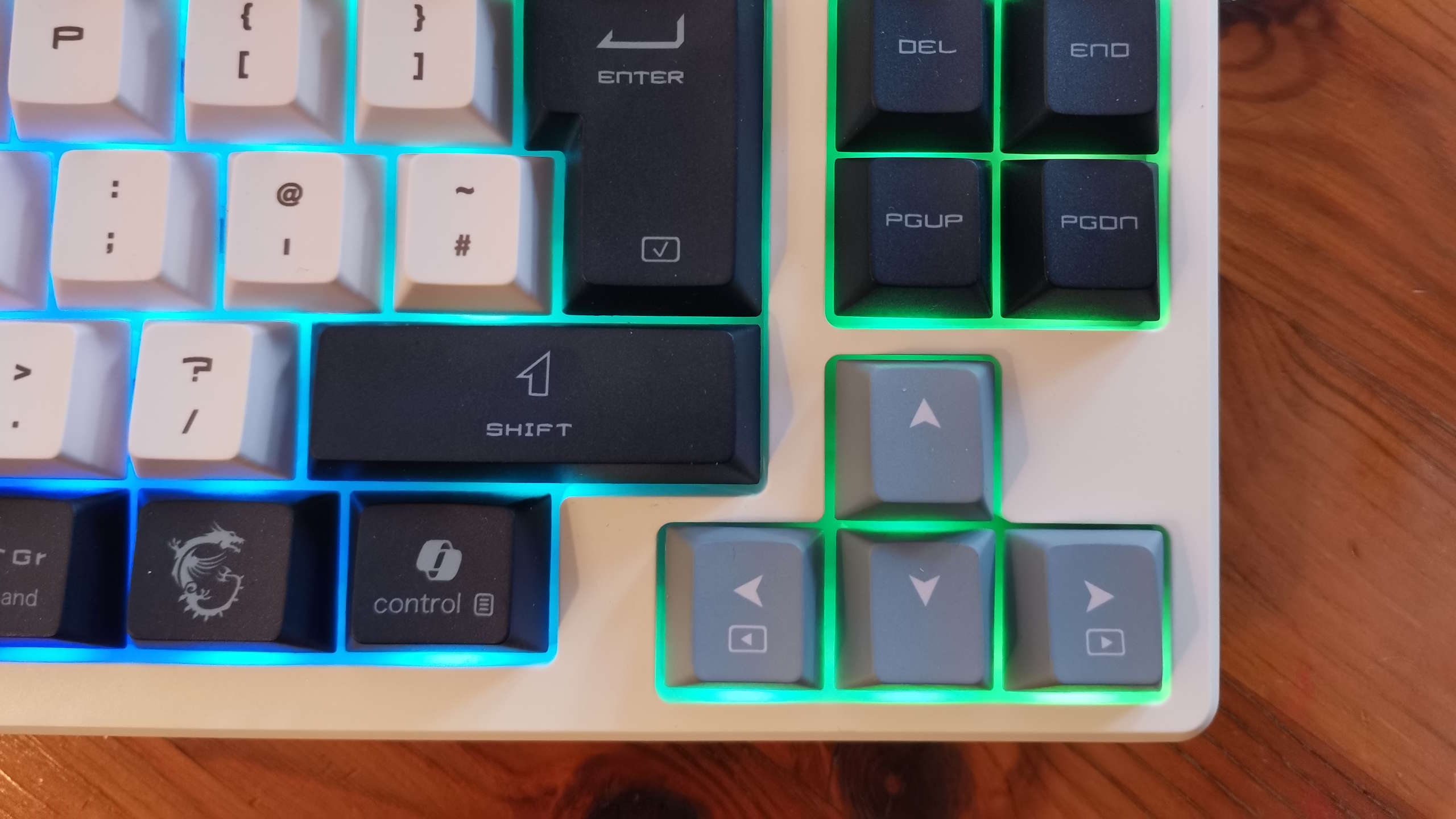
Sadly, MSI opted for opaque legends on the Forge GK600 keycaps, which means the board is all but useless in the dark. Everything else about the keys is fantastic, however, from the cute, tri-tone colourway, to the OEM profile that gently cradles my fingers, to the subtle non-slip keycap texture. The fact everything is hot swappable is just the cherry on the cake, or on the keyboard if that's what you want. Should MSI's proprietary linear mechanical switches not suit your preferences—and they won't be for everyone—it's easy to swap them out for third-party switches of your choice.
For a lot of people hot-swap switches will be the main draw, but since the Forge GK600 positions itself close enough to the budget range, it could happily appeal to users who aren't into keyboard modding. That said, the lack of alternative switch options for the base board is more likely to alienate any non-modders hankering for a clicky experience, or something a little more tactile.
Tapping away at the board, the linears are swift and offer some intense resistance, though they can feel a little gooey with the level of bounceback. It's clear some effort has gone into sound dampening. With an IXPE foam layer, silicone pad and various extra layers added to try to keep the noise down it does a good job of softening the clunk. Sadly, all that padding affects the board exponentially when it comes to weight and thickness.

✅ You're in need of distinct directional keys: As a TKL board, the D-keys aren't as bunched up as smaller, compact boards. It means you can easily find them without looking down.
✅ You're looking to make the most of hot-swap: Non-enthusiast keyboards with hot swappable keyswitches usually come in at a premium price for the privilege, but not here. Make the most of the money saved and nab yourself some interesting switches to play around with.
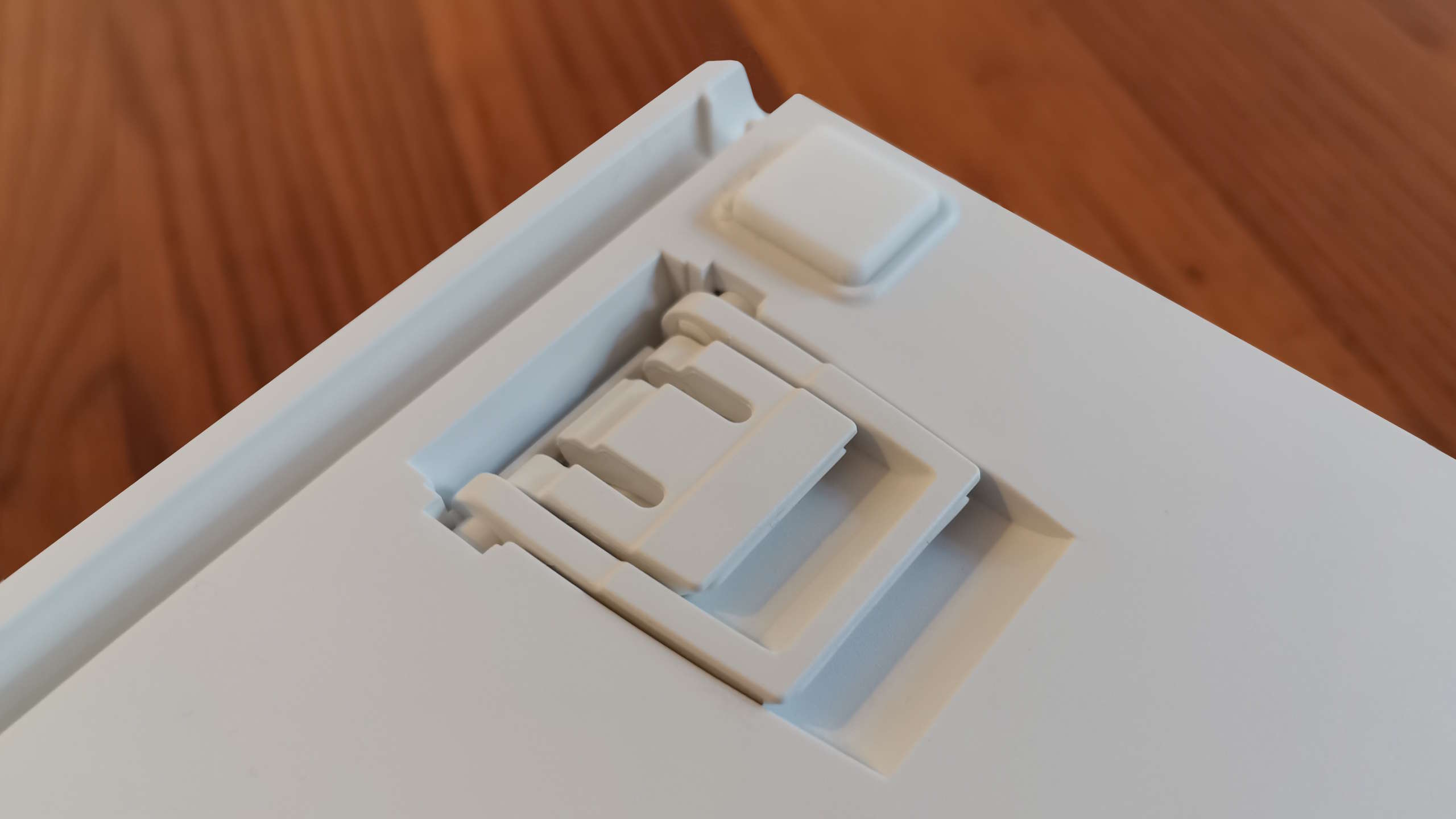
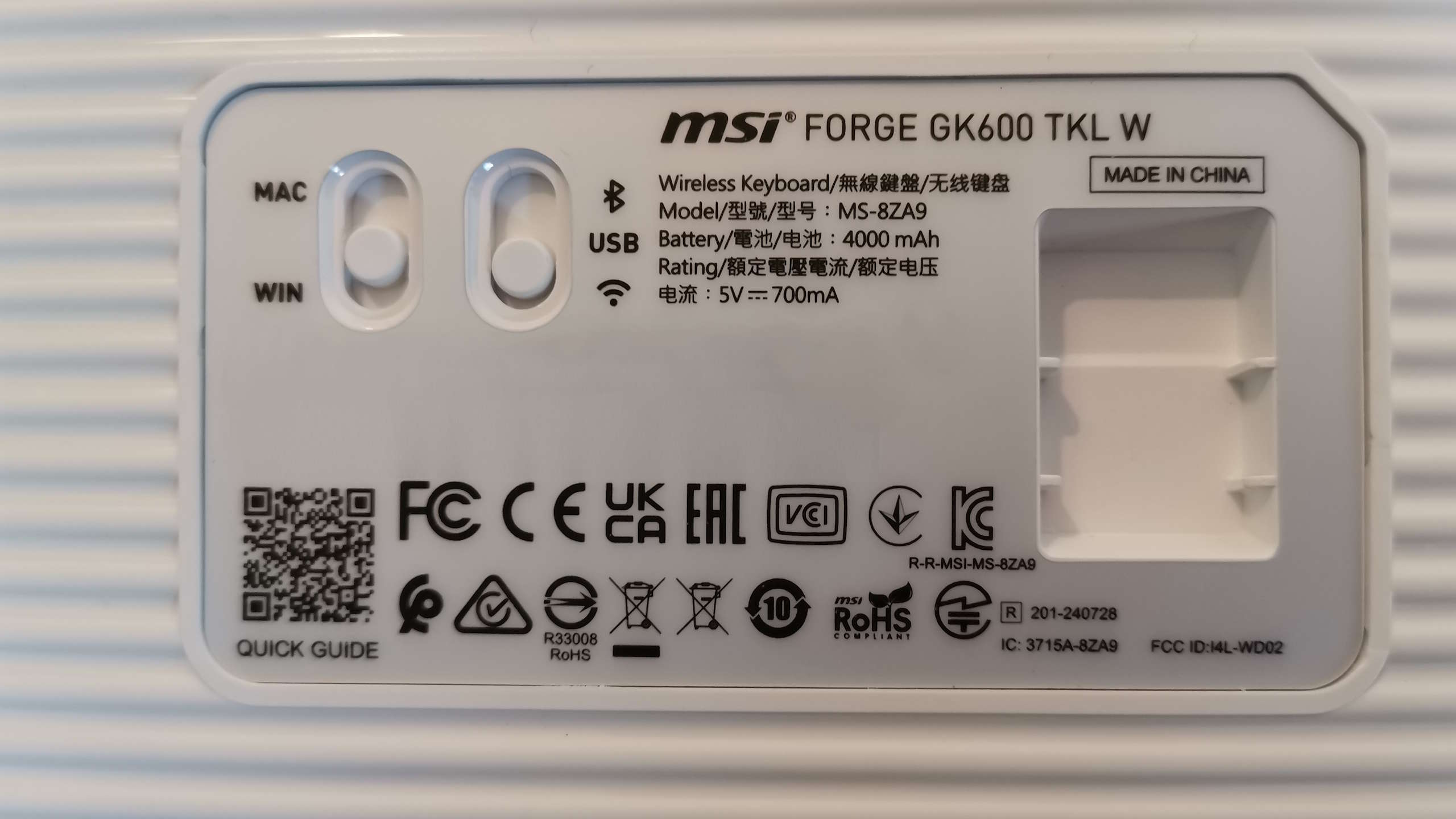
❌ You switch up devices and connections a lot: MSI could have made it a lot easier to switch between wired/wireless or just turn the thing off. A switch on the underside means it's a juggling act whenever you need to access it.
❌ You use your keyboard in the dark: Opaque legends on a gaming keyboard mean it's not entirely practical for use in the dark, which negates the need for RGB altogether really, other than as another way to waste the battery.
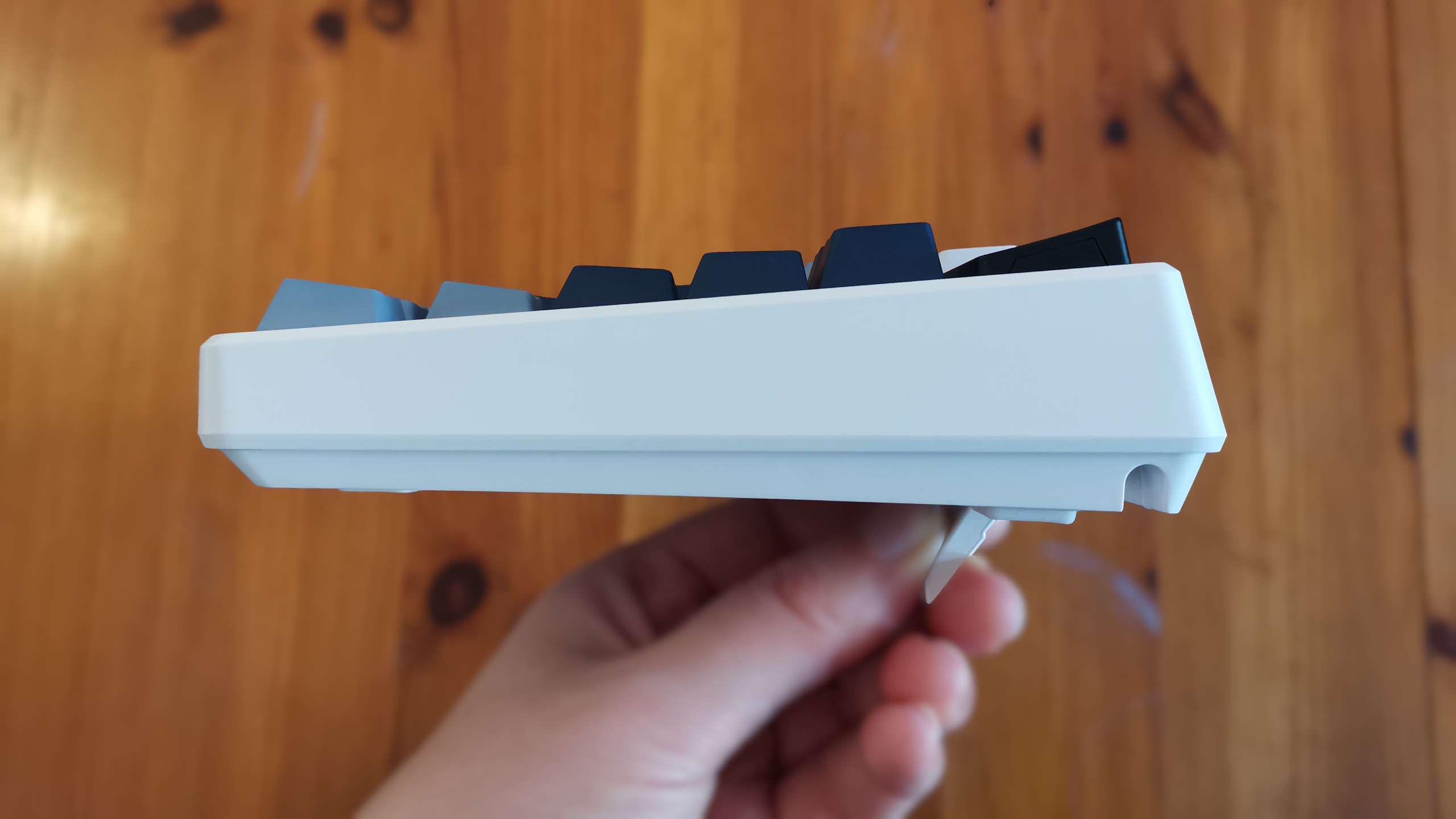
At the thickest point the Forge GK600 is 34 mm, and I wouldn't exactly call it a lightweight board either at 943 g. 56 g shy of a full kilo makes it a hard to champion as a portable keyboard. Sure you're saving a little more desk space and neatening up your battlestation with the omission of wires, but portability is something all wireless boards should be aiming to offer in the age of gaming on the go. The weight will also play into a decision for anyone who switches up connections a lot.
While it's possible to connect either it with the USB type-C cable, 2.4 GHz wireless via an appropriately compact dongle, or to up to three machines simultaneously via Bluetooth, the Forge GK600 hides the switch directly under the keyboard. It's dead center, with the labelling upside down if you lift the keyboard vertically. It's not even close to accessible, so if you switch connections a lot this probably isn't the board for you.
When all is said and done, the Forge GK600 TKL is a relatively good price for what you're getting. It's part of the budget Forge line that frankly has no business being as snazzy as it is. And so much for the pink tax, because the violet Forge GK600 TKL actually comes in cheaper.
At this price, it all depends on what you can afford to overlook as to whether this board is for you. If you're not worried about moving around and key spacing doesn't bother you, the Gamakay x NaughShark NS68 offers Hall Effect switches with programmable actuation for half the price of the GK600 TKL. Otherwise, the budget Forge GK600 TKL still offers a lot for stationary gamers who play mostly in rooms with the light turned on. We goblin-moders might look elsewhere, though.