
And now for something..membranical? Mem-chanical? What on earth do we call these things? It's been aeons since I last looked at a membrane keyboard positing itself as a value-oriented gaming option – the Glorious GMBK is the latest one to enter through the revolving door of potential disappointment.
Okay, I'm starting things on a sombre note, and I apologise for that. Maybe it's because I've seen it all before, but a £50/$60 membrane keyboard touting itself as a value-driven gaming keyboard with all the flashy RGB you could ever want is one of the oldest tricks in the book.
Nonetheless, the Glorious GMBK is here, and I've been employed by hardware overlord Jacob to give you my thoughts and opinions, so here you go……
….It's alright.
Switch type: Rubber dome membrane
Keycaps: ABS
Lighting: RGB, controllable in software and on keyboard
Onboard storage: None
Extra ports: None
Connection type: USB Type-C wired
Cable: USB Type-C/USB Type-A, detachable
Weight: 990 g/2.18 lbs
Price: $60/£50
That'll do, won't it? .... No? Ah, I suppose I'll have to expand on why I think that.
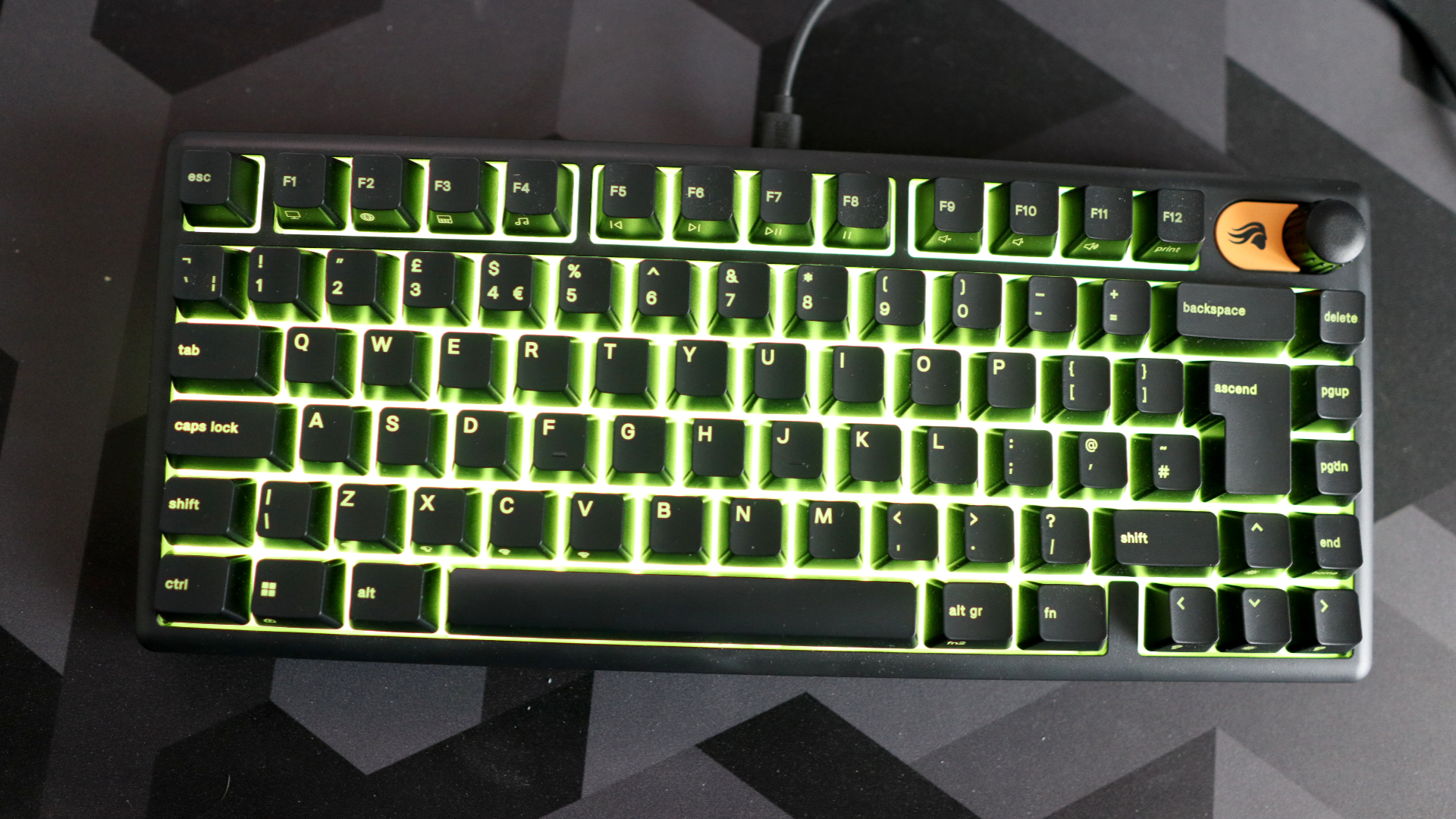
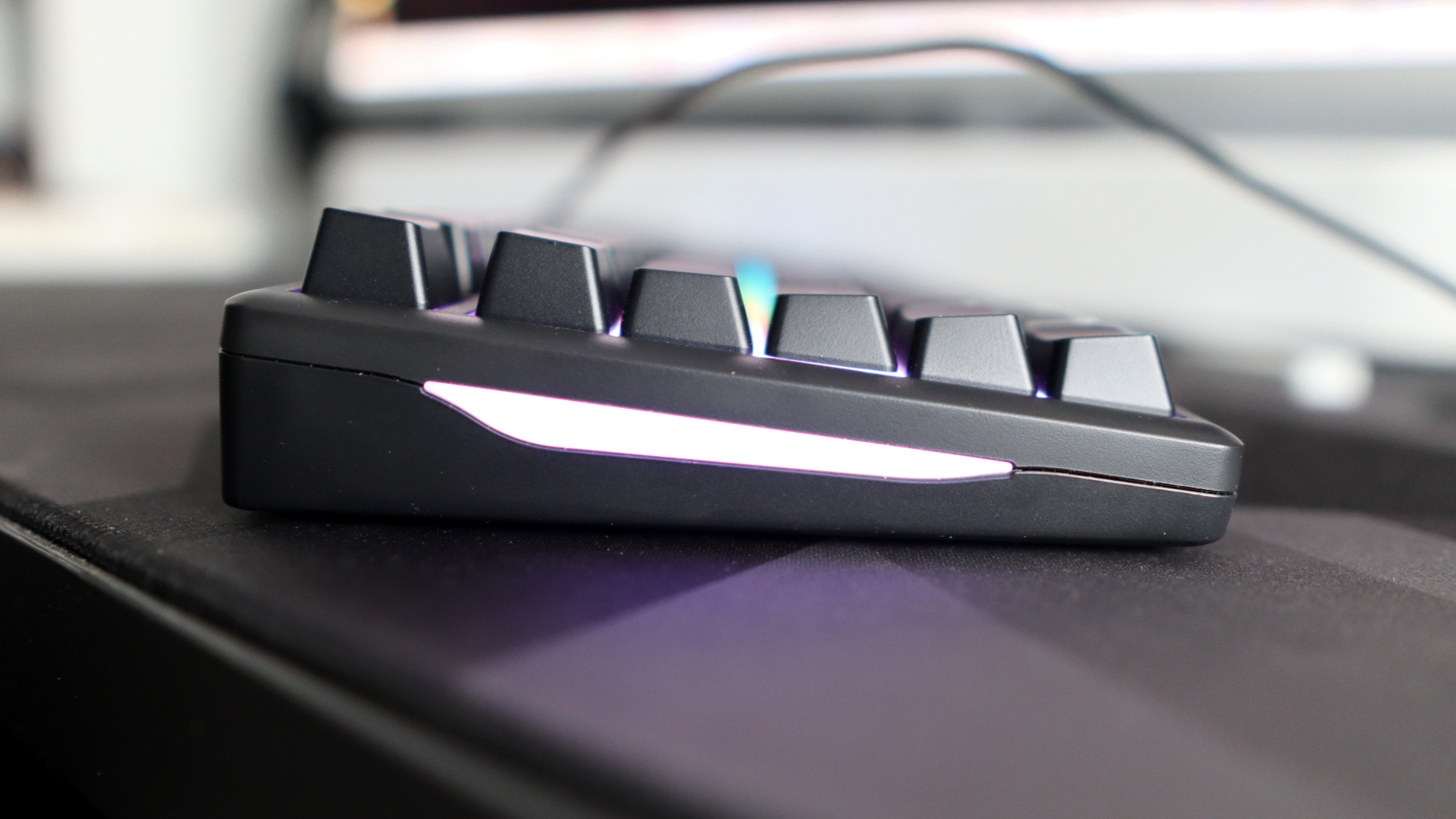
On the face of it, what's here is standard fare for a more affordable gaming keyboard, membrane or not. A reasonable plastic chassis that's surprisingly light and has a little bit of flex, plus smooth ABS keycaps that will eventually shine more than that Take That song, plus they are quite slippery in use. PBT keycaps, by contrast, have more of a textured finish to aid comfort and grip, plus have the benefit of being more durable and shine-resistant. It is also IP57 water resistant, so if you douse it in water accidentally or on purpose, it'll hold up.
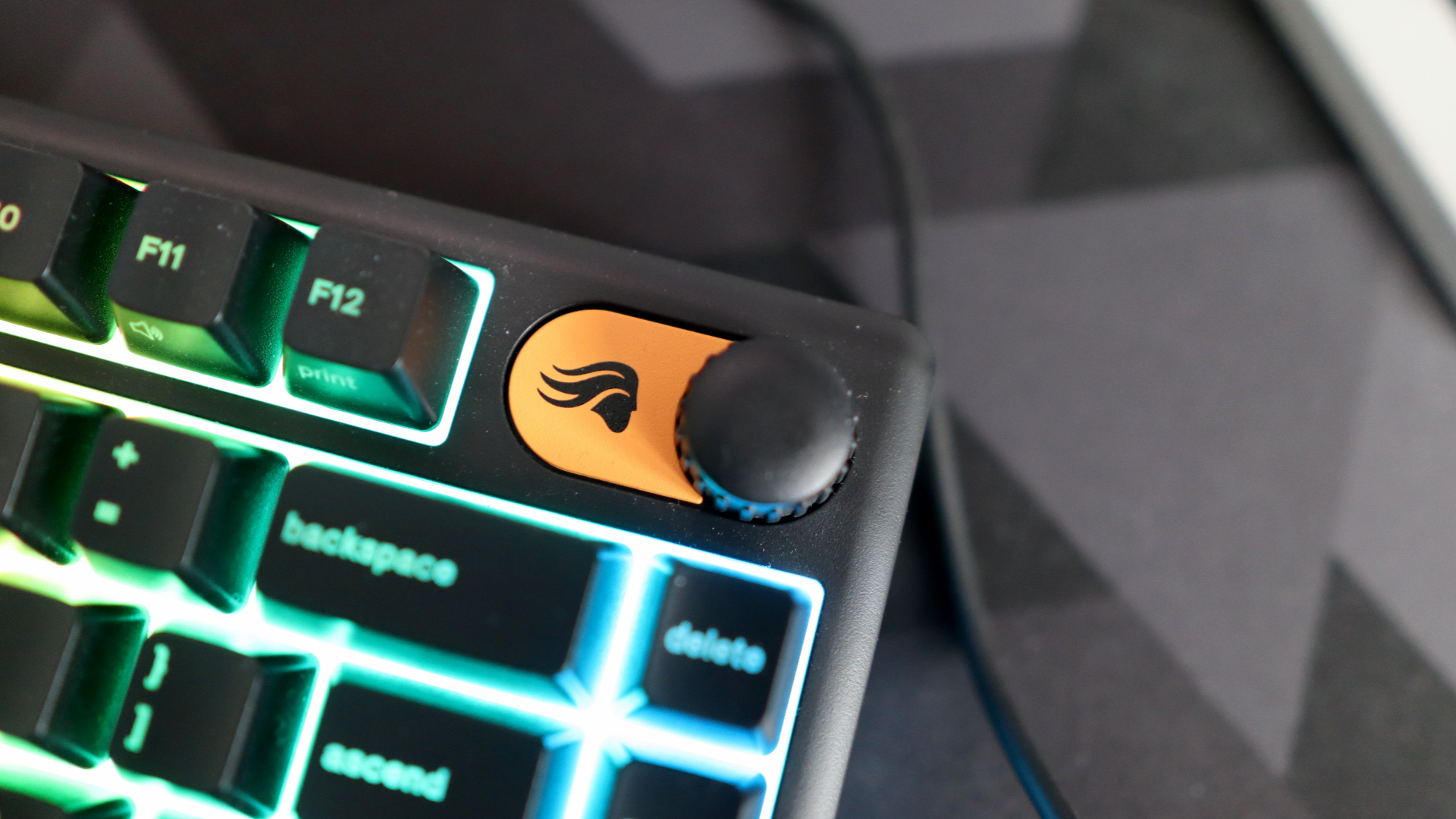
The 75 percent layout is a pleasant touch, and quite rare for this style of product, as is the knob in the top corner. Glorious told me the volume knob is swappable with those on their mechanical flagship GMMK 3, so if you want to give this humble membrane keyboard the premium treatment, then go right ahead.
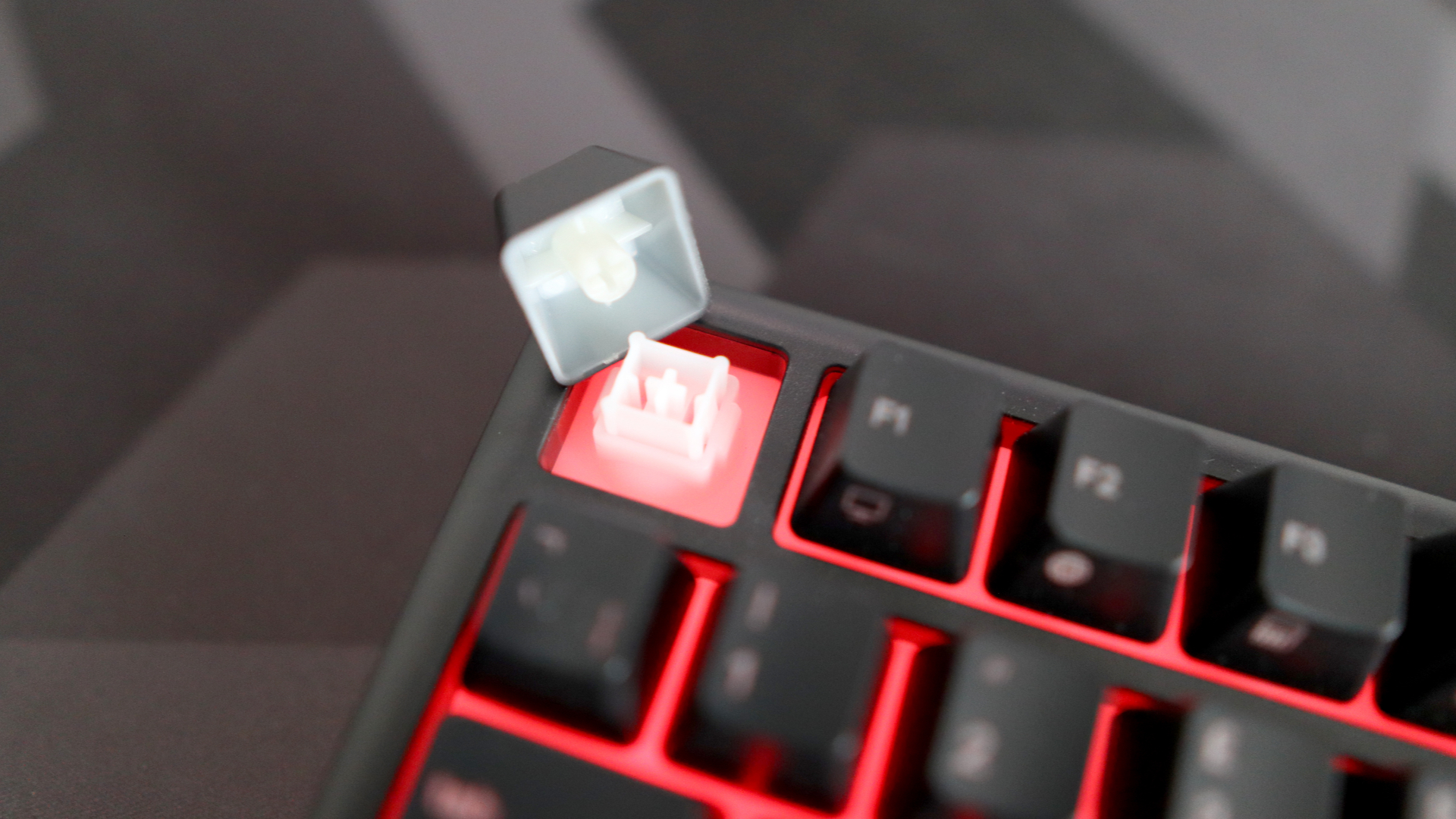
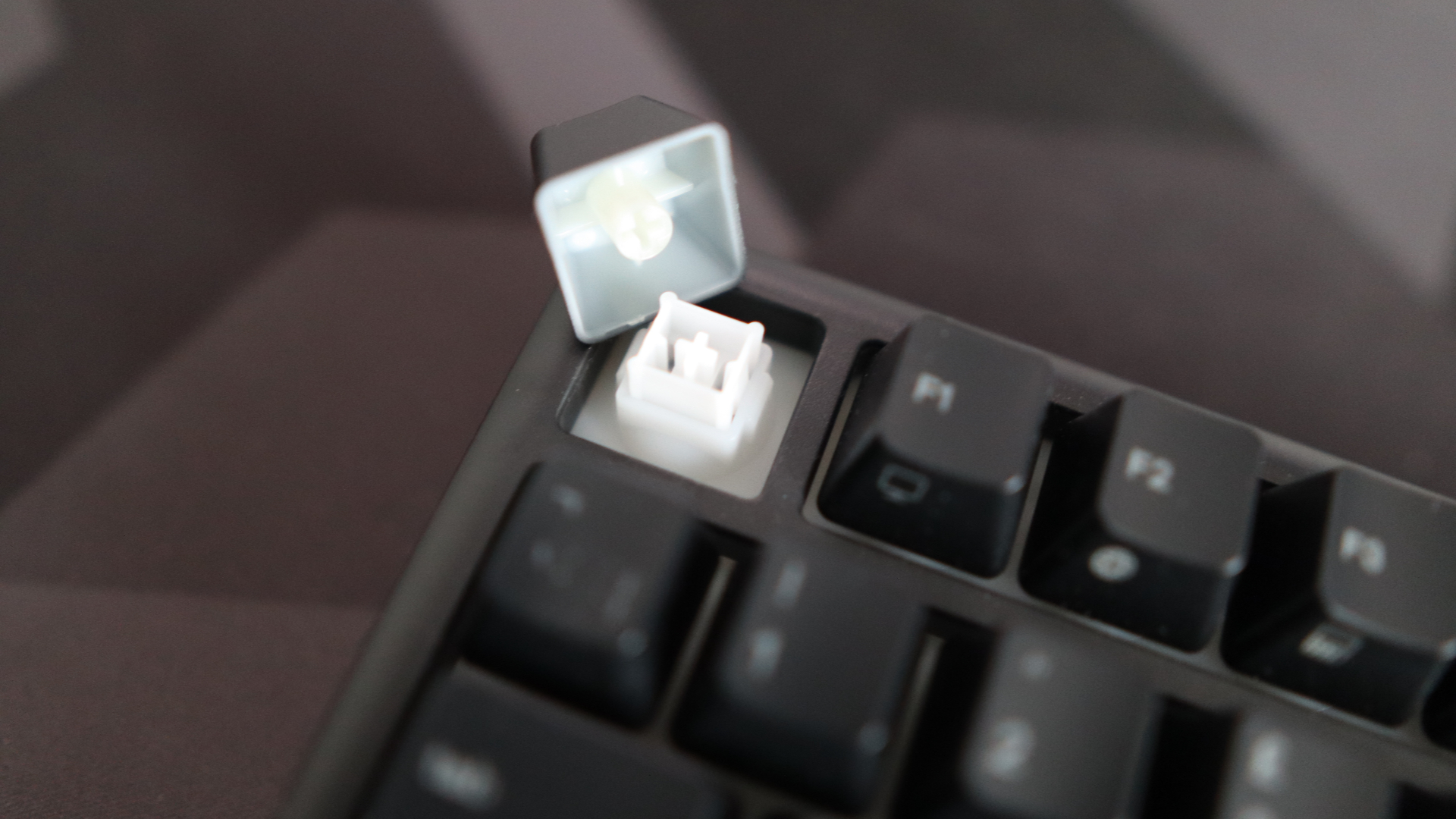
Another way you could give this keyboard the premium treatment is by swapping those wretched keycaps out. I can already hear you shouting at me—"You can't swap the keycaps out on a membrane keyboard!" Well, with the GMBK, you can.
Glorious has given the actuators underneath the keycaps an MX-style cross stem, which they say means it's possible to swap out the keycaps to any MX-style keycap set you have. That earns them some brownie points for innovation and customisability at least, and is the real USP of this keyboard over its rivals.
I'm trying to beat around the bush as much as possible in terms of describing the feel of the rubber domes underneath the keycaps, but I should probably just come out and say it.
The GMBK's membrane keypress feels heavy and laboured. After a decade or so of consistently using mechanical and electro-capacitive switches as an enthusiast, going back to a membrane board in any guise just felt wrong. It took me back to using the dreadful keyboards that were bundled with the PCs in computer suites when I was at school, except this one was missing half its keycaps. If schools get their hands on these, they can at least replace them.
Where tactile mechanical switches have a pleasant bump and a smoother keypress, the domes inside the GMBK make for a stickier and much heavier set of inputs that can get quite fatiguing after a time. Granted, they are some of the better domes I've used against this keyboard's rivals, such as the Roccat Magma, which could feel like a wet newspaper after just a few minutes of use, but the fact is that they're still rubber domes.

Glorious is claiming these domes are quiet switches, which I unfortunately have to disagree with. We're at a stage where silent mechanical switches are whisper-quiet, while the noise from the electro-capacitives inside my HHKB and Topre RealForce R2 is barely noticeable. By contrast, the domes here are quite loud and almost clicky, although not in the satisfying way you'd expect. It's more of a rhythmical drone as you get up to speed.
As for gaming performance, well, they're domes. The heavier keypress means these aren't as fast or precise in feel as mechanical switches, let alone the Hall effect magnetic switches that have now come to keyboards as far down the price ladder as this.
The Gamakay x NaughShark NS68 provides Hall effect and rapid trigger powers in a small form factor layout with PBT keycaps and a high polling rate for a comparable price tag. If gaming oomph is what you're after and you're strapped for cash, then go look at my review of that.
Connectivity? Sure, it's got some—a wired USB Type-C to USB Type-A cable that is detachable from the keyboard, so you can at least discard it to one side. It's one of the cheapest cables I've felt in some time, with a sticky feel to it that isn't too pleasant to touch.

And there is some software! Glorious Core is back and is actually usable with the GMBK. It's got a decently slick interface that provides a means of remapping RGB, plus sorting keybinds and even recording macros. You can also fiddle with RGB presets using the keyboard's function layer and arrow keys to cycle through and sort brightness.
So, where does all this leave us? I've often thought that membranical or mem-chanical gaming keyboards occupy a funny position in the market. Cheap enough to be attractive to the budget-conscious gamer, but not as desirable as mechanical products.
The GMBK doesn't do too much to move that needle. I can see why the £50/$60 price tag is attractive if you want a cheap keyboard with RGB lighting, plus its swappable keycaps at least make it different to other membrane products out there.
✅ You want a customisable membrane board: The GMBK is unique in its offering for a somewhat customisable membrane keyboard, which is neat.
❌ You want a better typing feel: The rubber domes inside feel stiff and heavy, and a comparable mechanical keyboard quite simply won't.
However, at every corner I turn to, I just find more reasons to opt for a cheap mechanical keyboard such as the Keychron K2 V2. That board has a similar layout, swappable mechanical switches and wireless connectivity for a similar outlay.
Or, for more of a gaming focus, the aforementioned Gamakay x NaughShark NS68 provides more durable PBT keycaps plus all the power of rapid trigger-capable switches for much faster, lighter, and more precise inputs for high-intensity gaming. And it has RGB.
I somewhat appreciate what Glorious has tried to do with the GMBK 75%, but it isn't sitting right with me, I'm afraid. Sorry chaps.