
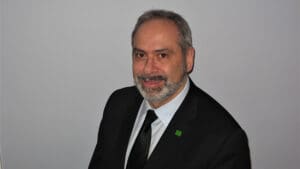
His early years included Scouts, altar service, ice hockey, baseball, Air Cadets, and later the Canadian Armed Forces Reserves. These experiences taught him structure, teamwork, and calm thinking under pressure—skills that would guide his entire career.
After earning an Honours Bachelor of Science from the University of Waterloo, where he was active in student politics and served on the Board of Governors and Senate, Jerry began his professional life in pharmaceutical sales. It was a critical period that strengthened his communication skills and helped him understand how organisations operate at every level.
In 1998, he transitioned into project management, the field that would define the next 25 years of his career. As Director of NewTech Horizons Inc., Jerry has led major programmes, built PMOs from the ground up, and overseen portfolios for large organisations, including a top five Canadian financial institution. His leadership style blends structure with empathy, always focusing on the people behind the work.
Alongside consulting, Jerry has taught project management for over two decades at Toronto Metropolitan University’s Chang School, as well as for other organizations. His students value his practical approach, clear communication, and engaging story telling as Jerry shares real world experiences to elaborate on theoretical concepts.
Jerry’s career is also tied closely to service. He sits on the Richmond Hill Community Food Bank Board and has volunteered with the Canadian Red Cross during emergencies. His journey reflects steady leadership, quiet confidence, and a commitment to helping others adapt to change.
My career started in pharmaceutical sales in the early 1990s. It was fast-paced and people-driven, which suited me well at the time. The turning point came when I realised I was more interested in how organisations executed change than in selling products. I moved into project management in 1998 and discovered that it combined everything I enjoyed—leadership, structure, and helping teams deliver something meaningful.
Growing up in a house with three older brothers teaches you quite a lot about negotiation. Air Cadets and later the Canadian Armed Forces Reserves taught me discipline and calm thinking. At the University of Waterloo, I served on the Board of Governors and Senate. Sitting in those rooms as a student taught me how decisions are made and how important it is to listen before speaking.
I start early. I like a quiet moment in the garden before emails and meetings begin. Most days involve client work—reviewing progress, leading teams, building capabilities, or coaching. I always leave time for teaching prep, because my courses at Toronto Metropolitan University keep me grounded. Evenings are often for decompressing and connecting with family and friends. Some days I block off just to take my motorcycle out for a day of riding. It’s my way of clearing the mind.
The pace of change. Twenty years ago, project management was about documentation and process. Today, agility is essential. Organisations often struggle not because of poor strategy but because they can’t adapt. I’ve built PMOs where the biggest challenge wasn’t the framework—it was helping people accept that change is constant.
During my Red Cross deployment to Kashechewan First Nation for the COVID response, I saw how communities come together and lead through a crisis with limited resources. It humbled me. Leadership there wasn’t about hierarchy—it was about helping people feel safe and supported. That experience changed how I approach difficult projects. People must come first.
Teaching reminds me that learning never stops. My students range from new graduates to senior managers. They ask sharp questions and bring real-world challenges into the classroom. I like to bring engaging and practical examples from my own work—things that went well and things that didn’t. It keeps the sessions honest. So we learn from each other. Nothing thrills me more than to see the light bulbs go off, or to hear the gratitude from learners who now see a different perspective on what Project Management should be for practitioners.
Learn how to listen. Tools and certifications matter, but if you can’t understand what people need, you won’t deliver results. And stay curious. The best project managers I’ve worked with are the ones who ask thoughtful questions.
Early in my consulting career, I underestimated the emotional impact of change on a client team. The project delivered on paper but didn’t land well with the people doing the work. Since then, I never start a project without investing heavily in stakeholder alignment. People must be ready for the change, not just informed about it.
Seeing people grow. Whether it’s a student who discovers a new career path or a client team that becomes confident in their own capabilities, those moments keep me going. Leadership isn’t about being the loudest—it’s about helping others succeed… growth and achievement.
Read more:
How Jerry Kafieh Built a Career in Leadership and Change