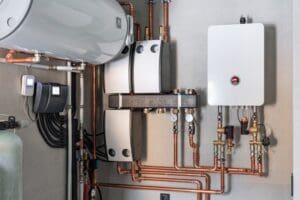
So, if you still have one, you might be thinking about replacing it. But how much does it cost to replace a back boiler? The answer isn’t simple. Several factors affect the total price, such as the new system you choose, the condition of your current system, and the size of your home.
In this guide, we’ll break it all down for you. You’ll learn what back boilers are, why they need replacing, and the full cost involved. We’ll also help you understand your options and what to expect during the process.
A back boiler is a small boiler unit that sits behind a fireplace or stove. It heats water for radiators and taps. It became popular in the UK in the 1960s and 70s.
These boilers worked well at the time. But over the years, they’ve proven to be less energy-efficient and harder to maintain than modern systems. Many back boilers are no longer supported or are illegal to repair due to safety rules.
Here are the main reasons people go for a back boiler replacement grant:
Back boilers usually have an energy efficiency rating of around 70%. In comparison, modern condensing boilers can reach over 90%. That means you’re likely wasting energy and paying higher bills with a back boiler.
Some old back boilers, especially the Baxi Bermuda models, were found to be dangerous if not properly maintained. Cracks and leaks can lead to carbon monoxide leaks. Many models are now banned or discontinued.
Replacement parts are hard to find. Skilled engineers who can work on back boilers are also rare. Most professionals recommend removing them altogether.
Current building regulations make it almost impossible to fit a new back boiler. If you plan on selling or renting your home, you may have to replace the old system to meet the standards.
When replacing a back boiler, you have three main options. Each one affects the total cost.
A combi (combination) boiler is the most popular option. It heats water on demand and doesn’t require a hot water cylinder or storage tank. It’s compact and ideal for smaller homes.
Pros:
Cons:
A system boiler needs a separate hot water cylinder but no cold-water tank. It works well in larger homes where hot water is needed in multiple places at once.
Pros:
Cons:
This is the closest match to your back boiler setup. It uses a hot water cylinder and a cold-water tank. If your house already has this system, it may be cheaper to upgrade this way.
Pros:
Cons:
Let’s get to the big question: How much does it cost to replace a back boiler? Here’s a breakdown of all the costs involved.
The price depends on the brand, size, and energy rating. Popular brands like Worcester Bosch, Vaillant, and Ideal may cost more but come with longer warranties.
The installation work is often the biggest part of the total cost. A back boiler replacement is not a simple switch. It requires:
Expect to pay between £2,000 – £3,000 for installation alone.
You may also need extra materials like:
Labour and time will also increase if your home has difficult access, outdated pipework, or if you’re moving the boiler far from the original spot.
Let’s put it all together.
| Option | Boiler + Install + Extras |
| Combi Boiler | £3,500 – £5,000 |
| System Boiler | £3,800 – £5,500 |
| Regular Boiler | £3,400 – £5,000 |
These are ballpark figures for a standard 2–3 bedroom home in the UK. The final cost depends on your property, location, and choice of boiler.
Most back boiler replacement jobs take 3 to 5 days. Here’s why:
If there are complications, it may take longer. But a trained engineer can give a clearer time estimate after inspecting your home.
Yes! Several UK schemes can help with the cost of back boiler replacement:
This helps homeowners switch to low-carbon heating. You could get up to £7,500 for replacing your boiler with a heat pump or renewable system.
If you’re on certain benefits, you may qualify for a free boiler replacement under the Energy Company Obligation scheme. This includes removing back boilers in some cases.
Many boiler companies offer payment plans or 0% finance. This can help you spread the cost over 2 to 10 years.
Since back boilers sit behind fireplaces, you’ll have to deal with the space they leave behind. You have several options:
Some homeowners even choose to install a wood-burning stove in the space. Just make sure your installer seals off the chimney properly to avoid draughts or safety issues.
In most cases, you don’t need planning permission for a back boiler replacement. However:
Always make sure your installer provides a Building Regulations Compliance Certificate after the job is done.
A: In most cases, no. Replacement parts are rare, and many back boilers are no longer legal to repair.
A: Sometimes. If you choose a system or regular boiler, you can use your current tank. But if it’s old, replacing it may still be best.
A: For smaller homes, a combi boiler is ideal. For larger homes, a system boiler may be better.
Replacing a back boiler is a big job. But it’s often necessary for safety, efficiency, and comfort. While it may cost between £3,500 and £5,500, the long-term savings on your energy bills make it worth it.
Choosing the right system depends on your home’s size, layout, and hot water needs. A registered installer can help you pick the best option and handle the process safely.
Whether you go for a combi, system, or regular boiler, make sure to compare prices, ask for warranties, and check if you qualify for any Eco4 Scheme grants.
Back boiler replacement might seem costly up front, but it’s a smart move for a warmer, safer, and more efficient home.
Read more:
How Much Does It Cost to Replace a Back Boiler?